
9 Awesome Hacks for Your Garden to Simplify the Gardening Chore
Skip the Long Learning Curve
People will tell you to be patient when gardening.
“Wait for the soils to get better.” “Give plants time to establish.” “Results take years.”
If you have infinite patience, that’s fine. But what if you don’t want to see progress next year — but this month?
These smart home gardening hacks for quick results bring progress in days or weeks — not seasons. They are made with everyday items that you probably already have at home. No expensive products. No complicated techniques.
I mean, smart hacks that old-time gardeners use to get better plants quicker.
Because we can do better, in your garden as in everything else.
Hack 1: The Coffee Ground Power Up
That morning coffee waste? It’s garden gold.
Coffee grounds from used coffee add nitrogen to the soil, improve drainage and attract earthworms. And they’re totally free if you already drink coffee.
What Coffee Grounds Actually Do
Nitrogen is what makes the plants leafy and green. It’s the lead number in fertilizer formulas (the “N” in NPK).
At least 2% nitrogen is present in coffee grounds. That doesn’t sound like a lot, but it adds up to look and feel significant.
They also improve soil texture. Sandy soil holds water better. Clay soil drains faster.
The Right Way to Use Coffee Grounds
Whatever you do, don’t dump fresh grounds right around plant stems. When fresh, they’re too high in acid and can burn roots.
Do: Add used grounds to your compost pile. They decompose rapidly, and act as a counterpoint to carbon-rich materials such as dry leaves.
Spread a thin layer (1/4-inch) around established plants as mulch. And let them sit for a week, too.
Don’t sprinkle dry grounds into potting soil before planting. Mix 1 part grounds with 4 parts soil.
Which Plants Love Coffee Most
| Type of Plant | Reason Why Coffee Works | Application |
|---|---|---|
| Tomatoes | Use to produce leaves | Work into soil before planting |
| Roses | Favor slightly acidic soil | Lightly sprinkle around base once per month |
| Blueberries | Acid soil lovers | 1/2 cup per plant |
| Azaleas | Acid-loving flower and flowering shrubs | Mix in top 2 inches of soil |
| Carrots | Enjoy the fact that soil is of looser texture | Mix into planting bed |
The Quick Results Timeline
- Week 1: Soil is more workable, less compacted
- Week 2-3: Increased presence of earthworms in treated zones
- Week 4-6: Noticeable increase in healthy leaves
Keep a container under the sink for your coffee grounds. When it’s full, toss them in your garden.
Hack 2: Eggshells to Give Your Plants a Calcium Boost
Tomatoes get blossom end rot. Black spots appear on the fruit of peppers. As it happens, both issues result from lack of calcium.
Eggshells are 95% calcium carbonate. They are the perfect problem solver hidden in your garbage.
Preparing Eggshells for Your Garden
Rinse shells to get rid of any egg residue (deters smell and pests).
Dry them in the sun till they are completely desiccated 2-3 days.
Crush them into small pieces. You can use a rolling pin, or a blender, or even a coffee grinder.
Fine powder works fastest. Larger chunks also work, but they will remain for months before breaking down.
Three Ways to Use Eggshells
Method 1: Direct Planting
Crush the eggshells and add 2 tablespoons to the planting hole of tomatoes, peppers or eggplant while transplanting.
Method 2: Soil Amendment
Mix ground shells with potting soil or dirt. Spread 1 cup per square foot of space.
Method 3: Eggshell Tea
Soak crushed shells in water for 24 hours. You can use the calcium-rich water to water plants.
Fast Results You’ll Actually See
- Prevention: Mix shells into soil at time of planting; see the difference on new blooms and fruits
- Improved stems: Stronger in just 2-3 weeks
- More fruit production: Increased yields after 4-6 weeks
Here’s a simple one: Keep a container for eggshells near your coffee grounds. The best fertilizer is free fertilizer.
Hack 3: Newspaper to Stop Weeds Without Chemicals
Weeding wastes hours every week.
Chemical weed killers come at a price — and over the long term can be hazardous to your health. There is a better way, and it doesn’t cost you anything.
The newspaper acts as a light block. Weeds can’t grow without light. Your plants are safe because newspaper decomposes naturally.
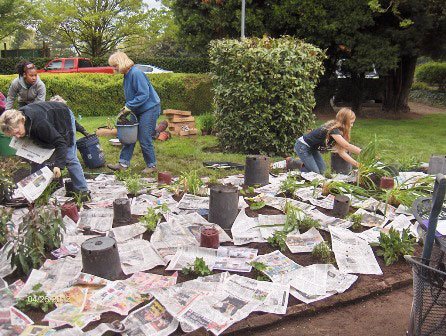
The Newspaper Weed Barrier Method
Wet newspaper thoroughly. Dry paper blows away.
Place 4-6 sheets thick around plants. Overlap edges by several inches.
Cut holes for existing plants. Spread newspaper in space then plant.
Mulch 2-3 inches deep with wood chips, straw or grass clippings on top of newspaper. This weighs it down and it looks better.
What Newspaper Is Doing in Your Garden
- Blocks 98% of sunlight and prevents weed seed germination
- Lengthy life span of 4-6 months
- Reduces watering by keeping the soil protected from the strong summer sun
- Absorbs up to 5X its weight in water
- No waiting or preconditioning, cut roll, unroll and you are done
- Earthworms like it!
The Smart Application Strategy
| Garden Area | Layers To Apply | Best Times Of Applying |
|---|---|---|
| Around tomatoes | 6-8 sheets | After transplanting |
| Between rows | 4-6 sheets | Before weeds sprout |
| Under mulch | 4-6 sheets | Early spring |
| New garden beds | 8-10 sheets | Fall, let decompose over winter |
Fast Results Timeline
- Day 1: Weeding already in progress; existing weeds are dying back because they’re being denied light
- Week 1: New weeds are not able to penetrate the barrier
- Week 2-4: Huge reduction in weed growth / work effort
Just use the black and white newspaper. Stay with colored sections, but don’t want any glossy colored areas that can contain heavy metals.
Hack 4: Epsom Salt For Monster Sized Plants – Use It as Foliar Spray and for Watering
Epsom salt isn’t actually salt. It’s magnesium sulfate.
Magnesium is necessary for plants to make chlorophyll (the green in leaves). Without the mineral, leaves yellow between veins.
A $5 box of Epsom salt from any drugstore will supply you with a year’s worth of magnesium fertilizer.
How to Use Epsom Salt
For Transplants: When planting out tomatoes, peppers and roses add 1 tablespoon to each planting hole.
For Established Plants: Dilute 1 tablespoon per gallon of water. Water your plants once a month with this mixture.
For Foliar: Use 2 tablespoons/gallon of water. Spray on leaves in the early morning or evening (never under hot sun).
Plants That Respond Best
- Tomatoes and peppers have measurable results in weeks
- Roses bloom with more flowers and deeper colors
- Potatoes and other root crops soil test values will increase
- Fruit trees improve yields
What You’ll Notice
- Week 1-2: Darker green leaves
- Week 3-4: Rapid growth, thicker stems
- Week 6-8: More flowers and larger fruits
Don’t overdo it. Monthly application is plenty. More isn’t better.
Hack 5: The Plastic Bottle Greenhouse Trick
Seedlings and transplants loathe extreme temperature fluctuations.
Cold nights slow growth. Wind dries out tender leaves. Frost kills plants overnight.
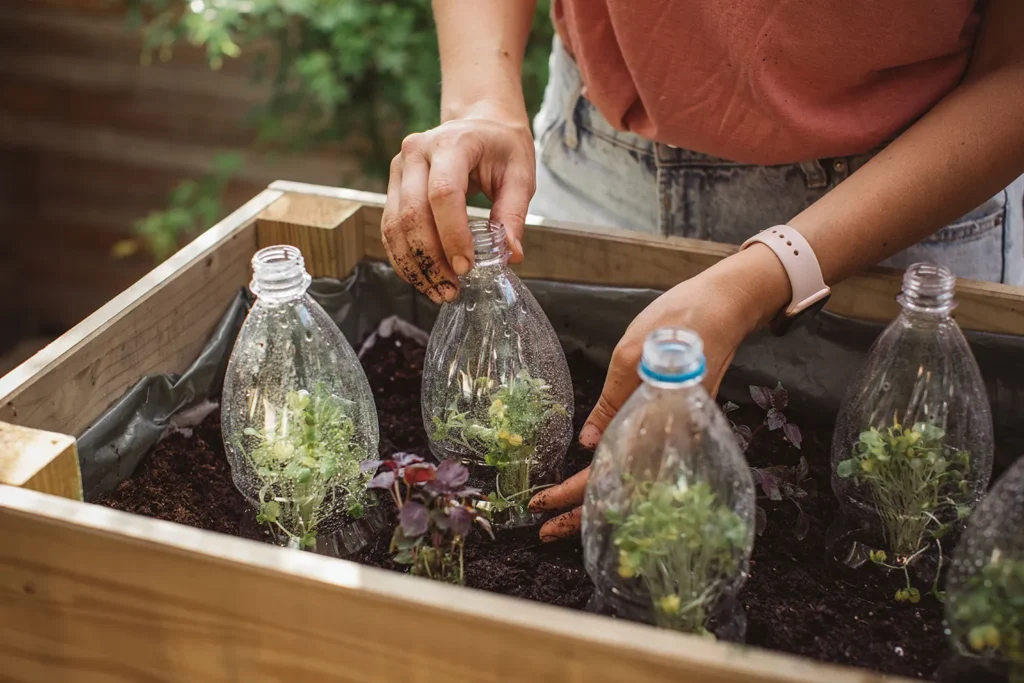
Sliced plastic bottle mini greenhouses solve all these problems for nothing.
Making Your Bottle Greenhouse
Cut the bottom off a 2-liter soda bottle.
Remove the cap for ventilation.
Fit bottle over seedling or small, newly transplanted plant.
Push bottle about 1 inch into soil to stabilize.
Why This Works So Well
- Holds in heat by day, slowly releases it
- Helps guard against wind damage
- Increases relative humidity so plant loses less water
- Protects against light frosting
When to Use This Hack
| Situation | Bottle Type | Duration |
|---|---|---|
| Outdoor seed starting | 2-liter, cap removed | Until seeds germinate |
| Hardening off your seedlings | 2-liter, removed during day | 7-10 days |
| Cover transplants | 2-liter or gallon jug | 2-3 weeks |
| Frost protection | Any size, cap on | Overnight only |
Fast Results You’ll See
- Day 1: Seedlings stop wilting due to wind
- Day 3-5: Quickened germination in cold weather
- Week 1-2: Faster growth from warmer environment
- Week 2-3: Earlier harvest time periods
Take off bottles when plant outgrows or when temperatures settle.
Hack 6: Blooming Plants Thrive on Banana Peels
Potassium (the K in the NPK fertilizer rating) is important for flowering and fruiting.
Peels of bananas are rich in potassium also phosphorus and calcium. They break down rapidly, releasing nutrients in a matter of weeks.
Three Uses for Banana Peels
Method 1: Compost Fresh
Chop peels into bits. Dig 2-3 inches around blooming flowers. Keep away from stems.
Method 2: Dry and Crush
Sun-dry peels, or oven-dry until crisp. Cut into pieces. Crush into powder. Work into soil or sprinkle on top.
Method 3: Banana Peel Tea
Steep 3-4 peels in a gallon of water for 2-3 days. This water can be used to water blooming plants.
Top Plants For Banana Peel Remedy
- Tomatoes: More flowers = more fruit
- Roses: Bigger, brighter blooms
- Peppers: More fruits
- Flowering annuals: Longer bloom period
Quick Timeline for Results
- Week 1-2: Peels decompose in the soil
- Week 3-4: Nutrients released into the plant’s root system
- Week 4-6: Visible increase in flowers and fruits
Freeze some banana peels if you have more than you need immediately for your garden. They freeze for months.
Hack 7: Save Drowning Roots Using Hydrogen Peroxide
If you’ve been noticing that your plants have brown root tips or stunted growth, there is a chance they may be drowning.
You overwatered. The soil smells musty. Their plants are wilting even with wet soil.
Root rot is setting in.
Hydrogen peroxide (yes, the same stuff you use on cuts) gives off oxygen in waterlogged soil. It can rescue plants that you thought were a goner.
The Emergency Root Rescue
Combine 1 cup of 3% hydrogen peroxide and water.
Pour this around the plant, until it fills at least the immediate root zone.
Stop watering completely, and allow the soil to dry out completely.
Repeat hydrogen peroxide application every 3 days until plant recovers.
How This Works
Hydrogen peroxide isn’t just another form of water, although it does break down into water and oxygen.
The extra oxygen allows suffocated roots to breathe again.
It also knocks off anaerobic bacteria, the kind that give us root rot.
Safe Usage Guidelines
| Plant Type | Mixture Ratio | Frequency |
|---|---|---|
| Overwatered houseplants | 1:2 (peroxide:water) | Every 3 days |
| Root rot in containers | 1:1 (peroxide:water) | Once then drench |
| Prevention in seedlings | 1:4 (peroxide:water) | Weekly watering |
| Hydroponic systems | 1:3 (peroxide:water) | Every 2 weeks |
Fast Recovery Signs
- Day 1: Fresh soil scent
- Day 3-5: Wilting decreases
- Week 1-2: New, healthy growth emerges
Use only plain 3% hydrogen peroxide. Higher concentrations can burn roots.
Hack 8: Transplant Shock Revived with Sugar Water
Plants get stressed when transplanted. Leaves droop. Growth stops. Some plants die.
A sugar solution diluted with water can give plants a quick energy boost to bounce back.
The Science Behind Sugar Water
Plants make sugar through photosynthesis. When they’re stressed, they cannot photosynthesize effectively.
Sugar also feeds plants as they recover.
You can think of it as an energy drink for plants.
How to Mix and Apply
Mix 1 teaspoon of regular ordinary table sugar per gallon of water.
Pour on transplanted plants with this mix straight after the transplant.
Use once only. Do not repeat, or you’ll invite pests and injure soil organisms.
When to Use This Hack
- Immediately after transplanting seedlings out of your house
- When transferring plants from one pot to another
- After pruning perennials
- Following root injury done through cultivation
Results Timeline
- One day: Less wilting
- Two to three days: Leaves perked up
- One week: Normal growth
This isn’t a regular fertilizer. It’s a first-aid boost only, for stressed plants.
Hack 9: Companion Planting Shortcut
There are plants that actually aid in the growth of other plants.
Basil next to tomatoes tastes better and is less attractive to pests. Use marigolds around vegetables to deter destructive insects. Beans add nitrogen which corn needs.
This isn’t superstition. It’s smart science that can help you right now.
The Best Companion Plant Combinations
| Main Plant | Plant It With | Benefit |
|---|---|---|
| Tomatoes | Basil, marigolds | Fewer pests, better flavor |
| Carrots | Onions, leeks | Repels carrot fly |
| Cucumbers | Radishes, dill | Attracts beneficial insects |
| Cabbage | Thyme, sage | Repels cabbage moths |
| Beans | Corn, squash | Nitrogen exchange, structure support |
| Lettuce | Chives, garlic | Repels aphids |
| Peppers | Basil, onions | Pest deterrent |
| Strawberries | Borage, thyme | Better fruit production |
Plants to Keep Apart
Never plant these together:
- Tomatoes and potatoes (share diseases)
- Beans and onions (inhibit one another)
- Carrots and dill (fight for nutrients)
Fast Results from Companion Planting
- Week 1-2: Pest pressure goes down
- Week 3-4: Healthier plant growth
- Season long: Crop yields will be better with less problems
In planning your garden layout, also consider companions from the beginning. Better than trying to reorder later.
Combining Hacks for Maximum Impact
These home gardening tricks and shortcuts for fast results work just as well when used together.
Try this complete fast-track system:
At Planting Time:
- Add coffee grounds and crushed eggshells to soil
- Add Epsom salt to your planting holes
- Lay newspaper around plants
- Water with sugar water solution
- Protect delicate young transplants with bottle greenhouses
Weekly Maintenance:
- Check soil moisture before watering
- Place banana peel chunks around flowering plants
- Take off bottle greenhouses when plants are large enough
Monthly Boosters:
- Water with Epsom salt solution
- Apply coffee ground mulch
- Add more eggshell powder
Track Your Results
Note which remedies are most effective in your own garden.
Gardeners are sometimes surprised by the dramatic response some plants show after coffee grounds are added to the soil. Bigger benefits from companion planting are observed by others.
What hacks you implement depend on soil type, climate and plant choice—all determine which ones give the best results.
Start Small and Expand
Select 2-3 hacks that seem the easiest.
Try them on a few plants.
When you see the results, scale up to more plants and incorporate more hacks.
Smart Shortcuts, Real Results
Gardening needn’t be a slow, dispiriting thing.
With these nine home gardening hacks for instant success, you get:
- Weeks, not months to healthier plants
- Better harvests without expensive products
- Hacks using things you have on hand at home
- Visual progress that motivates you
None of these hacks replaces good basic care. You still have to water appropriately, get enough sunlight, and pick the right plant for your space.
But these hacks help speed your success and solve problems more quickly.
Let’s begin with coffee grounds and eggshells. They’re free, and work with almost anything.
Throw in the newspaper weed barrier to save yourself hours of labor.
Give Epsom salt a go with your tomatoes and peppers for astounding results.
Every hack you try brings you one step closer to the productive, beautiful garden you long for.
The best part? You can get started today, using items you already have at home in your kitchen and recycling bin.
For more comprehensive information on gardening techniques and best practices, visit the Old Farmer’s Almanac gardening section.
Frequently Asked Questions
Q: Can I do all of these hacks at once on the same plants at the same time?
A: Yes, but phase them in slowly. Begin with 2-3 hacks and introduce more occasionally. It’s hard to know what’s working if you change too much at once. Coffee grounds, eggshells and newspaper can be combined safely.
Q: How long do coffee grounds stay in the soil?
A: Coffee grounds decompose in 3-6 months, providing a slow and steady release of nutrients. The soil structure improvements are longer lasting. Repeat every 2-3 months for ongoing results.
Q: Will ink on my newspapers hurt my vegetables?
A: Most newspapers today are printed with soy-based inks, which are safe to use in the garden. Stay away from shiny colored segments that may be saturated in volatile heavy metals. Keep it plain black and white newsprint.
Q: Can I overdo it with Epsom salts?
A: Yes. More than once a month can lead to magnesium buildup in soil that interferes with the availability of other nutrients. Stick to monthly applications. If you see brown edges on the leaves, you’re using too much.
Q: Do banana peels attract bugs?
A: Fresh peels can create a magnet for fruit flies and rodents if left sitting on the soil. Always have them buried 2-3 inches deep or use the dried/tea methods. This prevents pest problems.
Q: Is it okay to use hydrogen peroxide in organic gardening?
A: Yes. Hydrogen peroxide is decomposed into water and oxygen with no toxic products remaining. It’s approved for organic gardens, and won’t hurt beneficial soil organisms if used correctly.
Q: When can I expect to start seeing results from these hacks?
A: Some results show up in days (newspaper weed control, bottle greenhouses). Some others need 2-4 weeks (coffee grounds, eggshells, Epsom salt). Advantages of companion planting are not all realized until the conclusion of the season.
Q: Could I use these hacks indoors for my indoor houseplants?
A: Most work great indoors. Coffee grounds, Epsom salt, eggshells and hydrogen peroxide all do great things for houseplants.