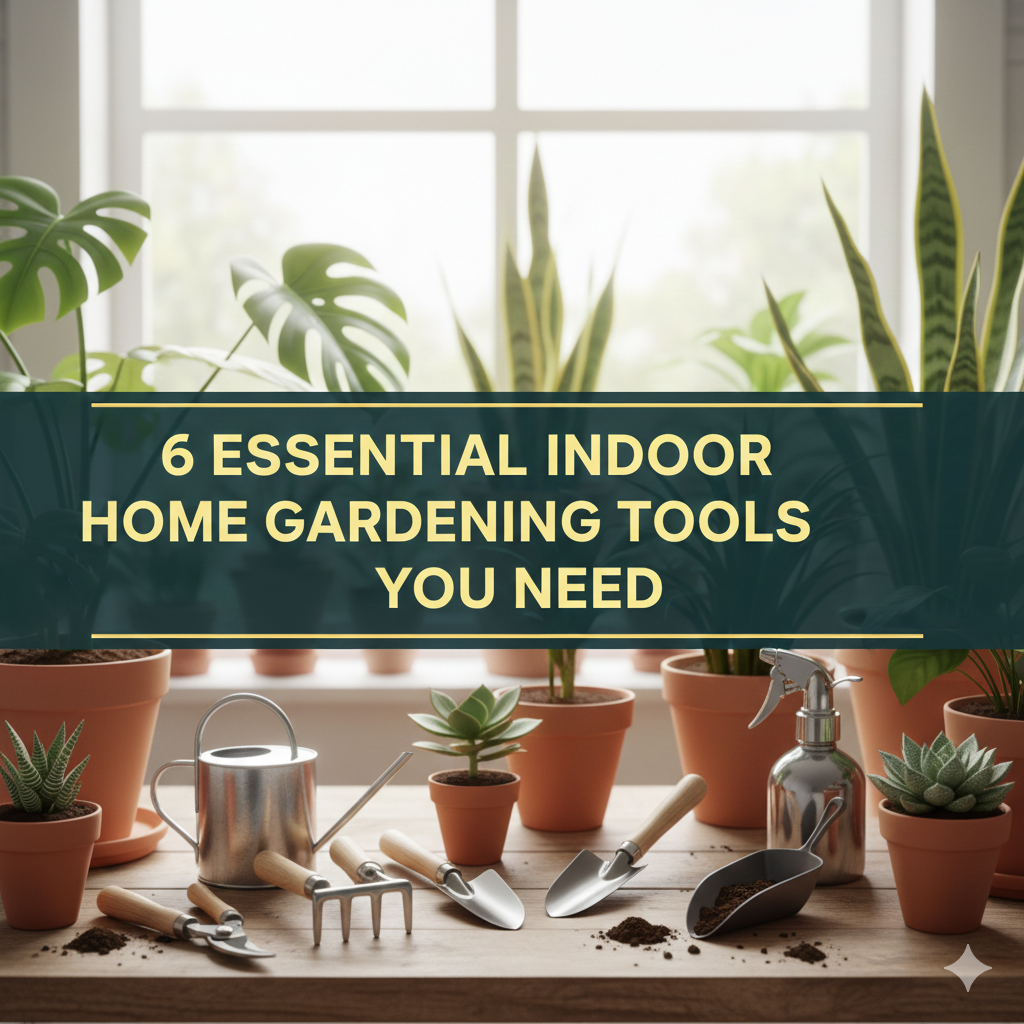
6 Essential Indoor Home Gardening Tools You Need
6 Must-Have Tools for Indoor Gardening at Home
Indoor gardening is booming. Whether you live in a small apartment or yearn for fresh herbs from your kitchen, there’s always room for indoor garden ideas. But here’s the catch: you have to have the right tools to make your indoor garden succeed.
Many beginners are overwhelmed when they first start indoor gardening. They question what equipment is absolutely necessary and what’s simply extra. The good news? It doesn’t take a garage full of costly gear. There are just six essential things that you need to get started.
This guide explains what you will need to create a successful, productive indoor garden. We’ll assess each tool closely, tell you why it matters and help you find a good fit for your space and budget. Let’s get down and find out what you need to kick your indoor gardening game up a notch.
Why Indoor Gardening Tools Matter
The right tools make everything easier. Imagine working in a kitchen with no good knife or sitting down to a bowl of soup without a spoon. That is what indoor gardening without the right gear feels like.
Indoor plant species face a different set of challenges than those growing outside. They depend on you entirely for water, light and nutrients. The right tools allow you to deliver precisely what your plant requires and when.
Good tools also make you save time and money. They keep users from making common errors, including overwatering and using subpar soil. By buying quality gear the first time, you also save yourself from having to buy cheap tools only to have them break or not work as well.
Tool #1: Quality Potting Mix and Soil Scoop
The Foundation of Healthy Plants
Everything starts with your potting mix. It’s not just dirt—it’s a carefully balanced growing medium that feeds your plants and encourages their roots to breathe.
Your typical garden soil won’t do in the house. In containers it becomes too dense, choking off roots and inhibits drainage. Indoor potting mix is formulated with components including peat moss, perlite and vermiculite to remain loose and airy.
An effective potting mix accomplishes three critical tasks:
- Holds moisture without becoming waterlogged
- Offers air space for strong root development
- Has feeding nutrients for your plants
Choosing the Right Mix
Various plants prefer various soil types. Succulents and cacti like sandy, fast-draining blends. Tropical plants like moisture-retentive soil. Most of the time, all-purpose potting mix is great for herbs.
Search for a mix that lists its ingredients transparently. Steer clear of products that have a heavy feel or musty smell. The potting mix should smell earthy and fresh.
The Trusty Soil Scoop
A soil scoop makes it neat and easy to move potting mix. Get yourself one with a comfortable handle and sturdy build. Scoops made of metal are more durable than plastic, but plastic works fine.
A few scoops have measurement markings on the side. This is great for mixing your soil amendments or fertilizer. Most indoor gardening tasks are handled just fine with a medium-sized scoop (1-2 cups).
Tool #2: Watering Can with Long Spout
Precision Watering Matters
There is not a larger killer of indoor plants than overwatering. With the right kind of watering can, you control exactly how much water each plant gets.
Long-spout watering cans can get under leaves and apply water where it needs to go, on the soil. This keeps leaves and foliage dry so they don’t encourage fungal diseases or leave unsightly water spots.
The small spout also produces a soft flow, not a hard splash. This will shield tender seedlings and save the soil from being washed away.
Features to Look For
And when it comes to watering cans, size does matter. Good sizes are 1-2 gallons for most house plants. The smaller ones need to be filled up all the time while the bigger ones are impossible to lift without a struggle.
Look for these helpful features:
- Comfortable handle that balances when full
- Removable spout for easy cleaning
- Transparent material so you can see water level
- Wide opening for easy filling
Metal watering cans are preferred by some gardeners because they’re durable and look classic. Others prefer a plastic model for lightness and convenience. Either one works—just go with what feels good to you.
Pro Watering Tip
Fill your watering can and let it stand overnight before applying. So chlorine can off-gas and the water is room temperature. Cold water can shock plant roots, and room-temperature water is more natural to your plants.
Tool #3: Hand Pruners and Scissors
Keep Your Plants Healthy and Shaped
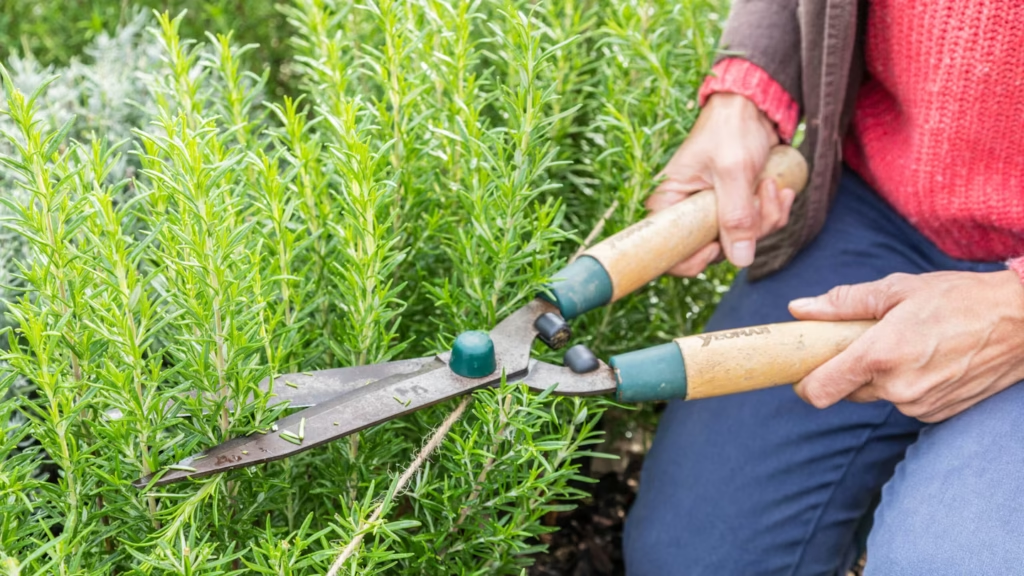
It’s not only for aesthetic effect that plants are pruned. It’s crucial for the health of plants, to encourage bushier growth and remove diseased or damaged sections.
Smooth, clean cuts heal quicker than ragged tears. Good pruners make clean cuts that don’t put stress on your plants. Dull tools crush stems, opening them up to infection.
Types of Cutting Tools
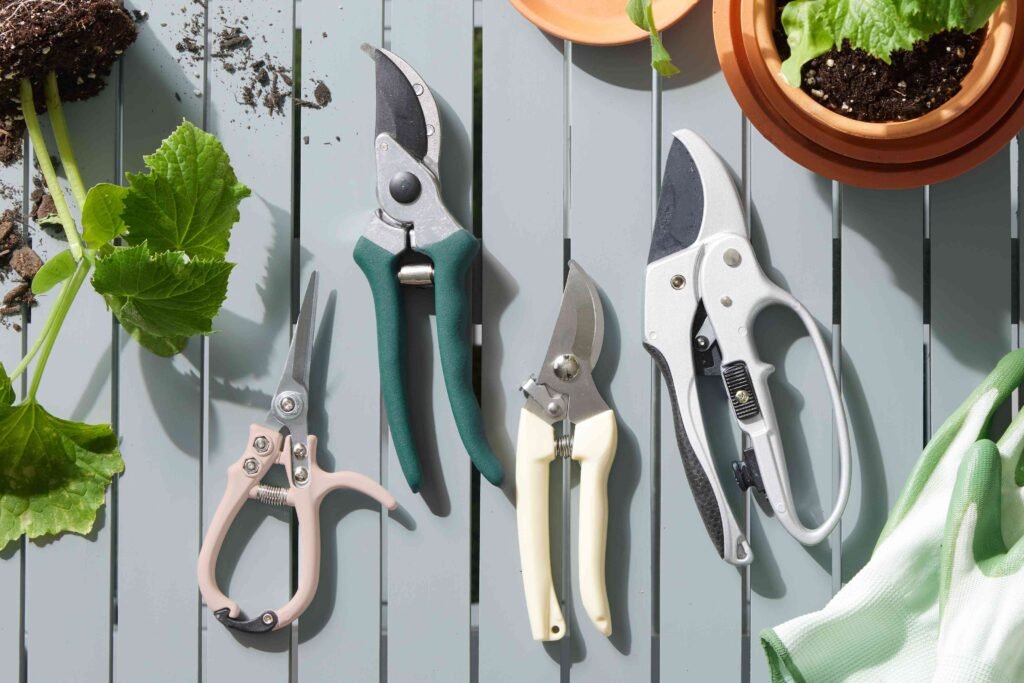
Bypass Pruners: These are similar to scissors, with two blades that pass each other. They produce the cleanest cuts and are suitable for live, green stems up to about a half-inch in thickness.
Herb Scissors: Scissors with several blades make cutting herbs a snap! One snip and you have many pieces to use, garnishing a dinner or getting fresh herbs ready for cooking.
Bonsai Shears: These tiny, sharp scissors are used to perform delicate work like trimming little leaves or shaping small plants.
Maintenance and Care
Clean your cutting tools after use. Clean blades with rubbing alcohol to avoid the spread of diseases between plants. This simple habit will keep your entire indoor garden more healthy.
Take the time to sharpen pruners at least once a season. Sharp blades offer less resistance, delivering a faster and more comfortable cut. Many garden centers offer sharpening services, or you can learn to do it using a simple sharpening stone.
Tool #4: Moisture Meter
Stop Guessing About Watering
One of the most useful tools in your arsenal might be a moisture meter. This nifty gadget removes the guesswork out of watering, letting you know precisely when your plants need water.
For the most part, moisture meters are battery-free. A metal probe that you stick in the ground to read moisture and show the results on a dial or digital screen.
How Moisture Meters Work
Place the probe as far down in the soil as you can, perhaps halfway to the bottom of the pot. Allow 60 seconds to read accurately. The meter reads moisture levels from dry to wet.
Various plants like various levels of moisture:
- Cacti and Succulents: water when dry on meter
- Tropical plants: water when meter shows a little moisture
- Most houseplants: water when meter registers between dry and slightly moist
Beyond Basic Moisture
High-end moisture meters read other things like pH and light levels. These multipurpose tools offer additional information but they are more expensive.
For novices, a straightforward moisture-only meter is sufficient. Once you have a little more practice under your belt, you could graduate to some fancier measuring instruments.
Tool #5: Grow Lights (LED Preferred)
Bringing Sunshine Indoors
Most homes don’t provide enough natural light for serious indoor gardening. Even south-facing windows may not provide enough light, especially in winter.
This issue is solved by grow lights that emit the precise wavelength plants require for photosynthesis. Modern LED grow lights are efficient, they run cool and can last you years.
Understanding Plant Light Needs
Different types of plants require varying levels of light:
- Low light plants: 50-250 foot-candles (peace lilies, pothos)
- Medium light plants: 250-1000 foot-candles (most houseplants)
- High light plants: 1000+ foot-candles (herbs, vegetables, and flowering plants)
One foot-candle equals the light from one candle at one foot distance. Most indoor environments, without supplementary lighting, have just 25-75 foot-candles which is not adequate for healthy plant growth.
Choosing the Right Grow Light
LED grow lights differ in terms of sizes and styles:
Bulb Style: Fits in regular light fixtures. Great for single plants or small areas.
Panel Style: Covers larger areas. Perfect for shelves or dedicated growing areas.
Strip Style: Attaches under shelves or in narrow spaces. Wonderful for an herb or microgreens garden.
Choose full-spectrum lights that have both blue and red wavelengths. Blue light encourages leafy growth, and red light encourages flowering and fruiting.
Light Timing and Placement
The majority of plants require 12-16 hours of light per day. Use an automatic timer to ensure consistent light schedules. This eliminates the trouble of remembering to turn lights on and off.
Place lights 6-12 inches above the tops of plants in most cases. Raise as plants grow to keep at optimal distance. Too close and heat stress can result; too far, and effectiveness goes down.
Tool #6: Plant Labels and Notebook
Organization Creates Success
This may sound like the most boring tool, but getting yourself organized makes everything else here work better. When you track what you are doing, you start to understand what works and what does not.
Plant labels tell you what you’re growing and when it was planted. This piece of simple information is very valuable once your collection becomes large.
What to Track
Keep notes about each plant:
- Plant name and variety
- Purchase or planting date
- Watering schedule and amount
- Fertilizing dates and products used
- Growth observations and problems
- Successful techniques and failures
This data allows you to see patterns. Perhaps your basil does well fed once a week, while your succulents need to be fed monthly. That knowledge makes you a better gardener.
Label Options
Plastic Stakes: Affordable and reusable. Write with permanent marker or pencil.
Wooden Stakes: Biodegradable option. Look charming in decorative pots.
Metal Labels: Long-lasting and elegant. More expensive, but worth it for permanent plantings.
Digital Tracking: For those tech-savvy gardeners, apps and spreadsheets are perfect. Many free apps for taking care of plants also feature watering reminders and growing tips.
Building Your Garden Journal
A humble notebook devoted to your indoor garden becomes a precious resource. Write down the date for each entry and mention what you see. After a while, you will develop your own guide that suits your personal circumstances.
Take photos regularly. Record growth progress and use them for diagnostic purposes. And it’s satisfying to look back and see the growth of your plants.
Bonus Tools Worth Considering
Once you master the six essential tools, here are some extras that will make your home gardening experience even better:
Spray Bottle: Raises humidity for tropical plants. It also works well as a mister for orchids and for rinsing leaves.
Small Hand Trowel: Use for transplanting and working soil in large containers.
Plant Support Stakes: Helps plants grow straight and supports climbing plants to keep growing vertically.
Humidity Tray: Provides localized humidity for plants that need more moisture.
Fertilizer: Indoor plants need regular feeding because they can’t access nutrients from the ground.
Creating Your Indoor Garden Tool Kit
Starting on a Budget
You don’t need to purchase the entire list all at once. Begin with the bare necessities: potting mix, watering can and pruners. You can introduce other tools as your garden expands and you have more money in the budget.
Keep an eye on sales at garden centers in fall and winter. Many shops reduce their supplies in the off-season months. Online vendors often have good deals as well, although shipping heavy products like soil can get expensive.
Quality vs. Price
Some tools are worth the splurge. Pruners of good quality will last decades; cheap ones start failing in months. LED grow lights by established brands offer better lighting and longevity compared with budget models.
For less money, there’s no shortage of items that work fine. An inexpensive plastic watering can works as well as an expensive copper one. Basic moisture meters have an accurate reading, despite any fancy features.
Storage and Organization
Corral tools in one spot. Have a small caddy, basket, or a shelf that you use just for gardening supplies.
Wipe down tools and let them dry before putting them away. This prevents rust and makes them last longer. A little maintenance now can save on costly replacements.
Common Tool Mistakes to Avoid
Using Garden Soil Indoors: Only plant in a container potting mix, not soil directly from the garden. Plain old dirt can lead to drainage and compaction issues.
Buying Cheap Pruners: Cheap, dull pruners damage plants and cause additional work. Invest in quality cutting tools.
Skipping the Moisture Meter: Many newbies waste money on plants that die from watering mistakes. A costly learning curve can be avoided with a moisture meter.
Inadequate Lighting: Plants cannot thrive in dim conditions. If you don’t have a lot of natural light, grow lights aren’t an optional upgrade—they’re essential.
Not Keeping Records: Memory is unreliable. Record what you do and when. Your future self will thank you.
Frequently Asked Questions
Do I really need grow lights for indoor plants?
It varies depending on your space and plant species. Natural light may be enough if you have bright, south-facing windows and are growing low-light plants like pothos or snake plants. But herbs, vegetables and flowering plants almost always need more light than what’s available in the average home. Even the brightest windows can rarely provide high enough intensity for these high-light plants.
How often should I water my indoor plants?
There’s no one-size-fits-all answer. Frequency of watering depends on plant type, pot size, soil mix, temperature and humidity. This is precisely why a moisture meter is so useful—it tells you when each individual plant needs water based on actual soil conditions, rather than following a fixed schedule.
Can I use regular scissors instead of pruners?
Regular scissors are fine for small, soft stems, but they’re not ideal. Kitchen scissors are not meant for plant material and can lead to ragged cuts that don’t heal properly. They also transfer food residue and bacteria to your plants. Dedicated plant pruners make a much cleaner cut and last longer when used for their intended purpose.
What is the difference between potting soil and potting mix?
These terms are commonly used interchangeably, but technically, potting soil includes actual soil, while potting mix is soil-free. Many products labeled for indoor use are actually potting mixes that contain peat moss, coconut coir, perlite and vermiculite. These ingredients provide better drainage and aeration than traditional soil for container growing.
How long do LED grow lights last?
Quality LED grow lights typically last 50,000 hours or more. If you run lights 14 hours a day, that’s almost 10 years of use before you need to replace the bulbs. This long lifespan makes LEDs more economical than older fluorescent or incandescent grow lights, despite higher upfront costs.
Should I buy organic potting mix?
Organic potting mixes contain natural ingredients with no synthetic fertilizers or chemicals. They’re a good option if you’re planting edible plants, such as herbs and vegetables. For ornamental houseplants, either organic or conventional mixes work fine. Choose based on your personal preferences and budget.
How do I know what size watering can to buy?
Consider how many plants you have and what their water requirements are. A 1-liter (about 1 quart) can is good for a small collection of 5-10 plants. Larger collections benefit from 2-gallon capacity. Keep in mind that larger cans get heavy when they’re full, so choose a size you can lift comfortably.
Your Indoor Garden Awaits
Starting an indoor garden doesn’t require overwhelming amounts of equipment or expense. These six essential items—quality potting mix with a scoop, a long-spout watering can, sharp pruners, a moisture meter, LED grow lights and organizational tools—will provide you with everything you need to be successful.
Each tool serves a specific purpose that makes plant care easier and more effective. Together they comprise a complete system to keep your indoor plants healthy and thriving year-round.
Remember that gardening is a learning process. Start with these basics, observe your plants closely, and adjust based on what you see. Every gardener makes mistakes—that’s how we learn and improve.
The joy of indoor gardening comes from watching plants grow under your care. Armed with the right tools, you’re now ready to create the lush, green indoor oasis you’ve been dreaming about. Your plants are waiting, and now you know exactly what you need to help them flourish.