
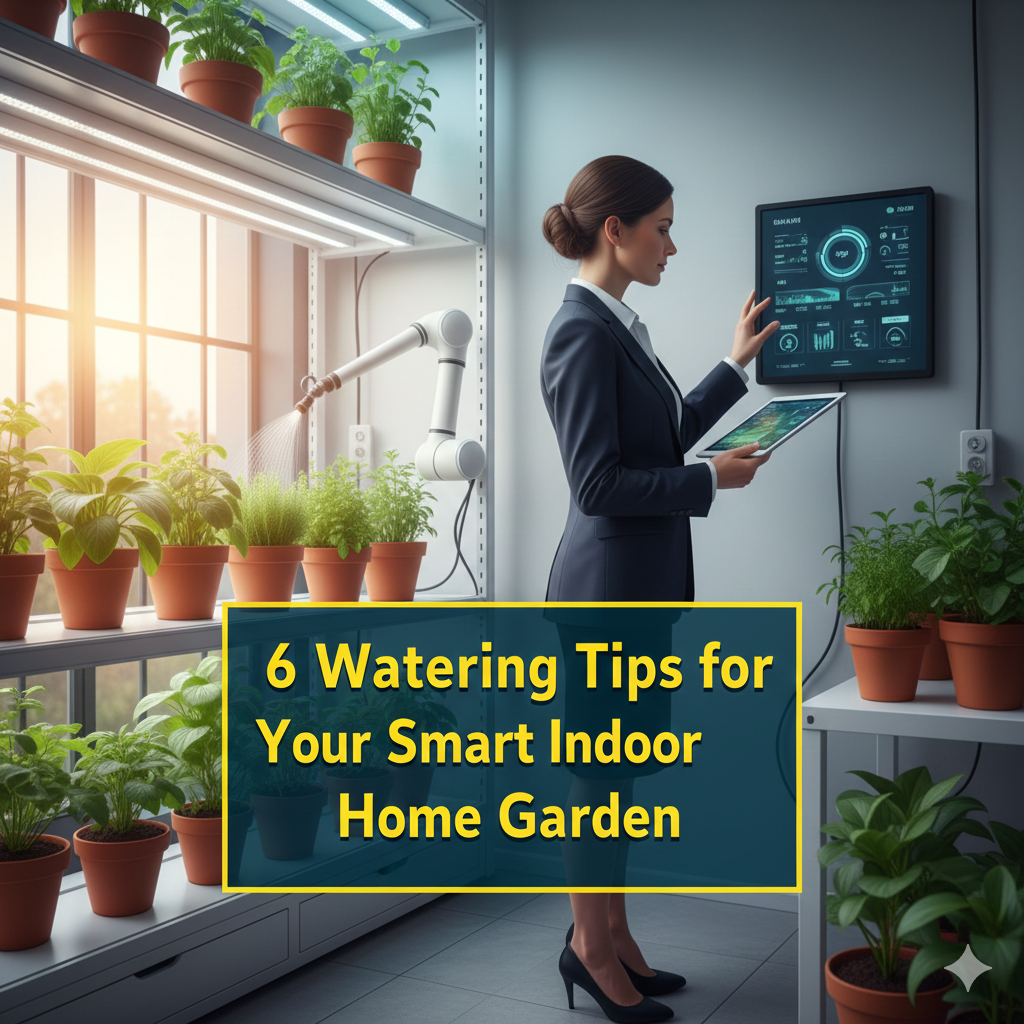
6 Watering Tips for Your Smart Indoor Home Garden
These Watering Secrets Will Keep Your Indoor Plants Happy
Now imagine this: You walk in to your living room and notice what was once your healthy spider plant is now drooping sadly. The leaves are changing color to yellow and brown. You watered it only three days ago. What went wrong?
If you’ve ever accidentally killed a houseplant, you’re not alone. There are so many incorrect ways to water your plant — and nearly 60 percent of indoor plants die at the hands of improper watering. The good news? Learning to water the right way is easier than you may think.
“Indoor gardening” helps to breathe life into your home. Plants are cleaning the air you breathe. They boost your mood. The science is in: Plants on our desks help reduce stress by as much as 37%. But these green pals require proper care to flourish.
In this guide, you’ll learn six easy watering methods that really work. No confusing science terms. No expensive equipment required. Just good, practical advice you can apply now.
Are you ready to step up your plant parenting game? Let’s dive in.
How Most People Do Watering Wrong
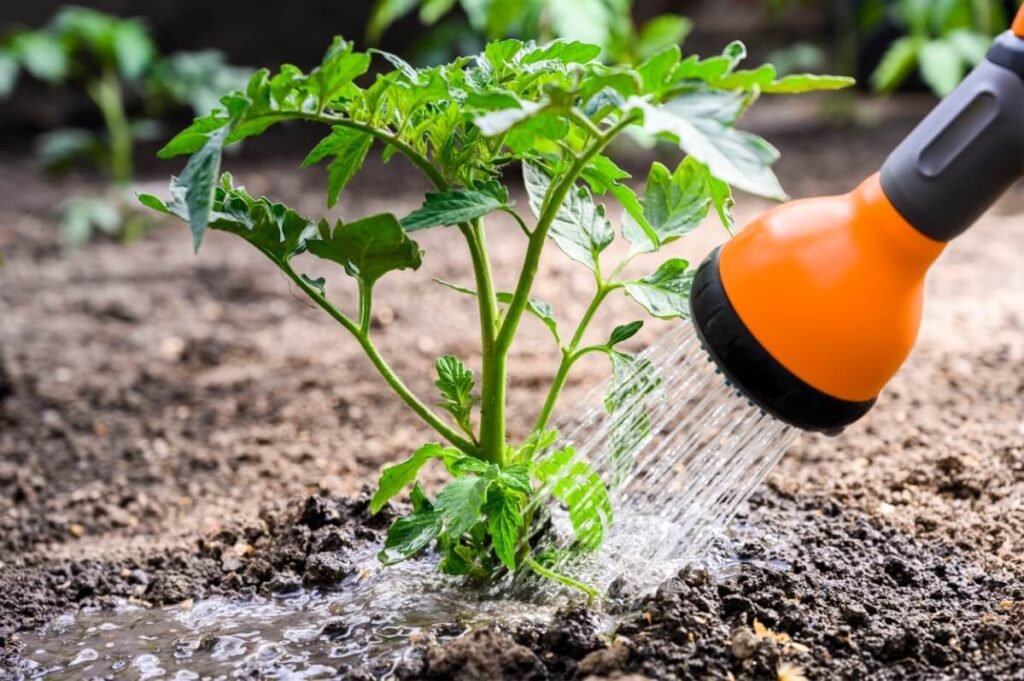
It’s the same mistake most new plant parents make. They water on a schedule. Monday is watering day. Every plant gets a drink. Done.
Here’s the issue: Plants are not on schedules.
Your snake plant may be happy going without water for three weeks. Your peace lily might require water every five days. They are in the same room, with entirely different requirements.
More houseplants are killed by overwatering than anything else. When the soil remains saturated, roots cannot breathe. They start to rot. The plant cannot take up water despite sitting in soggy soil.
Underwatering is also common. Some err on the side of not watering enough out of fear of doing too much. The soil gets bone dry. Leaves turn crispy. Growth stops completely.
The trick is not using a calendar. It’s learning to read what your plants are saying.
TIP 1: Touch the Soil Before Each Watering
The best watering tool you own? Your fingers. Seriously.
Before reaching for that watering can, reach down and stick your finger into the soil. Push it in, let’s say two inches down. This quick test reveals all you need to know.
Does the soil feel moist? Wait a few more days.
Does it feel dry? Time to water.
Various plants want various amounts of moisture. Here’s a quick guide:
Tropical Plants (such as pothos, philodendron and ferns)
Water when the soil is dry 1-2 inches deep.
These guys are a fan of moist soil.
Keep them from drying entirely.
Succulents and Cacti (such as jade, aloe, Christmas cactus)
Water when the top 2-3 inches of soil has dried out.
They like to be dry between waterings.
Less is best with these drought-lovers.
Plants That Like Medium Moisture (such as snake plants, ZZ Plants, and rubber trees)
Water when the top 2 inches of soil are dry.
They’re lenient if you forget one week.
Perfect for beginners.
The fingertip test is sufficient for most plants. But suppose you want to get more specific?
Using a Moisture Meter
Moisture meters remove the guesswork from watering. These inexpensive tools are under $15, and they will last you years.
Here’s how to use it the right way:
- Wipe the metal probe clean with a damp cloth prior to use
- Put the probe in about two-thirds of the way down into the pot
- Look for an accurate reading within 10 seconds
- Withdraw the probe and clean again
- Never leave the probe in the soil
Most meters indicate from 1 to 10:
- 1-3 (The Red Zone): Dry soil – most plants need watering
- 4-7 (Green Zone): Moist soil – ideal for tropical plants
- 8-10 (Blue Zone): Very moist soil – do not water yet
Now read in several places around the plant. Even soil moisture is not characteristic of the same pot.
Tip 2: Water Thoroughly and Less Frequently
Fast, superficial watering breeds weak plants. Here’s why:
If you add some water on top every few days, however, then roots will hang out there. They never grow deep. The plant destabilizes and can’t get into nutrients in lower soil.
Deep water is needed for strong root systems. Roots will grow downward in their search for moisture. This is the recipe for plants that are healthier and better able to resist disease.
How to Water Deeply
Drizzle water carefully over the whole pot. Not just one spot. Go completely around to ensure that every bit of the soil gets wet.
Continue watering until you notice water running out of the drainage holes. That means that moisture has made it to the roots at the bottom.
For a medium pot, that typically means about 5-10% of water should drain out. If you water a 6-inch pot, expect to see a few tablespoons drain out.
After deep watering, wait. Allow the soil to dry out well between waterings. That might be 5 days for a particular plant or 2 weeks for another.
Here’s a helpful watering table:
| Plant Type | Watering Frequency | Signs It Needs Water |
|---|---|---|
| Tropical Plants | Every 5-7 days | Leaves droop a little, top inch dries out |
| Succulents | Every 14-21 days | Leaves are soft and soil is fully dry |
| Ferns | Every 3-5 days | Leaves turn brown at the edges, soil is dry |
| Snake Plants | Every 14-18 days | Leaves wrinkle slightly, soil is dry three inches deep |
| Pothos | Every 7-10 days | Leaves curl, top two inches of the plant’s potting soil dry up |
And keep in mind: these are principles, not rules. The temperature and humidity of your home will impact the rate soil dries.
Tip 3: Look for Pots with Good Drainage
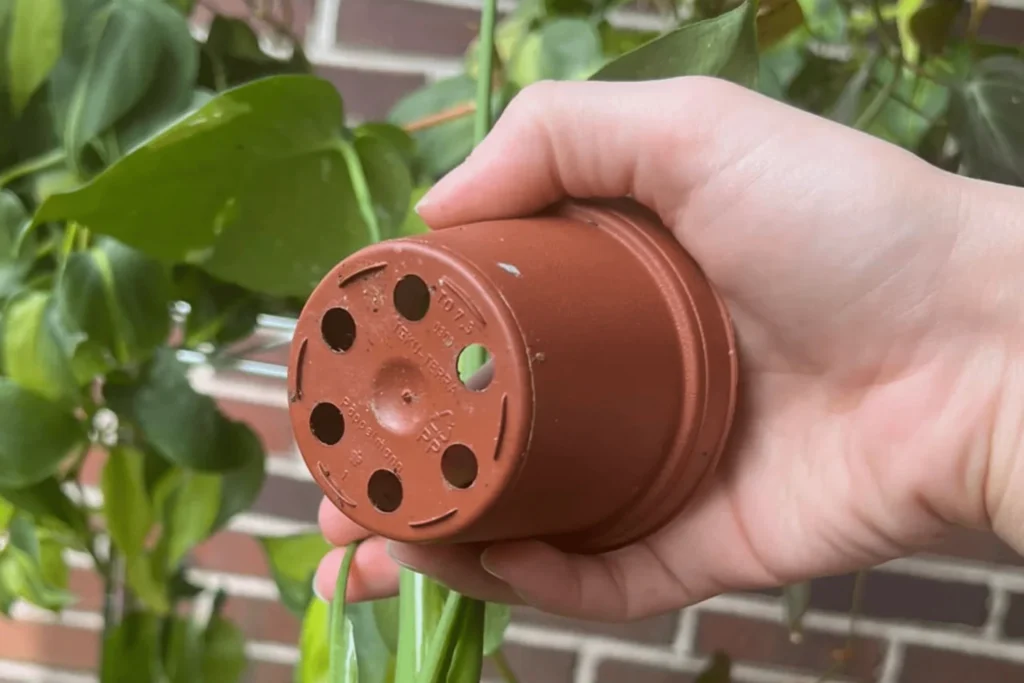
The prettiest pot in the world is useless if it causes your plant to drown.
Drainage holes are non-negotiable. They allow excess water to drain off so that roots are not sitting in soggy soil.
Stumbled upon a beautiful decorative pot with no holes? Here are your options:
Option 1: Drill Drain Holes in the Bottom
- Use a ceramic or glass drill bit
- Work slowly to avoid cracking
- Add 2-3 holes for great drainage
Option 2: The Double Potting Method
- Leave your plant in its plastic pot with drainage holes
- Then place it inside the decorative pot
- Take the inner pot out while watering
- Allow it to drain completely, and then replace it
Option 3: Create a Drainage Layer
- Insert a plastic drainage layer in the middle of the decorative pot
- Set the plant on top
- Water goes below and never reaches the roots
Don’t ever let your plant sit in water. Even for an hour. This is how root rot starts.
The Soil Matters: Soil Counts
Pots aren’t the only place that good drainage is important. Soil matters too.
Potting soil should be loose and light. It should crumble apart easily when you squeeze it. If it clumps together so thoroughly that it forms a hard ball, it contains too much water.
The following materials can be added to aid in drainage:
- Perlite: White volcanic rocks that form air pockets
- Orchid bark: Chunks that keep soil from settling
- Coarse sand: Denser than the fine variety, this can be helpful for growing a wide range of plants such as succulents and cacti
Blend these into your potting soil at 20-30% by volume.
Tip 4: Notice the Seasons
The amount of water your plants require varies throughout the year. The more daylight there is, the more they grow and drink.
Spring and Summer: Growing Season
Plants “wake up” when the days get longer and warmer. They grow new leaves. They need more water.
During these months:
- Check soil more frequently
- Water every 5-7 days, instead of every 10
- Plants by sunny windows will dry out more quickly
- Higher temperatures mean faster evaporation
Look for these signs your plant is thirsty:
- Leaves droop in the afternoon
- Top 1 inch of soil dries out in 3 to 4 days
- Plant grows fast and continues to produce new leaves
Fall and Winter: Rest Period
For the most part, houseplants are going to slow down when light levels diminish. They don’t grow as much. They need less water.
During these months:
- Reduce watering frequency by 30-50%
- Soil might stay wet for 10-14 days
- Be sure to avoid overwatering
- Wait longer between waterings
A plant that required watering once a week in the summer may need it only every two to three weeks in the winter.
This one sneaks up on a lot of folks. They maintain a summer watering schedule. By February, their plants are overwatered.
Tip 5: Learn To Recognize Over-Watering And Under-Watering
Plants can’t talk but they sure can communicate. You just have to learn their language.
Signs of Overwatering
Overwatered plants show these symptoms:
Yellow Leaves
- Old and new leaves all yellow simultaneously
- Leaves are soft and droopy, not crispy
- Frequently even the whole leaf goes yellow
Mushy Stems
- When you run your fingers across the bottom of the plant, it should be soft to touch
- Stems become black or dark brown
Soil Smells of Rotting
Fungus and Mold
- White or green fuzzy growth on soil surface
- Small flies (fungus gnats) are seen hovering around the plant
- Soil remains damp for over a week
Wilting Despite Wet Soil
- Plant is drooping even after watering
- That’s roots being damaged so they can no longer take in water
- Roots may be mushy and black instead of firm and white
Brown Spots with Yellow Halos
- Brown spots on leaves with yellow rings
- This indicates a secondary bacterial infection from over-moistening
- Younger leaves may be more susceptible than older ones
Signs of Underwatering
Underwatered plants look different:
Crispy Dry Leaves
- Brown, crunchy leaf edges that feel dry to the touch
- Tips dry and spread out first
- Leaves might be curled under on the edges
Soil Pulling Away
- You notice space between the soil and the sides of the pot
- Soil becomes hard and compacted
- Water is not absorbed; it just runs right through
Slow or Stopped Growth
- No new leaves for months
- Plant appears to be the same size as when you purchased it
- Existing leaves may get smaller
Whole Plant Drooping
- Stems wilt from lack of water pressure
- Leaves feel thin and papery
- Plant revives within hours of a drink
The Fix for Overwatering
If you’ve been overwatering:
- Stop watering immediately. Allow the soil to dry completely.
- Check the roots. Take the plant out from the pot carefully. Look at the root system. Healthy roots are white or light tan and firm. Rotten roots are black or dark brown and spongy.
- Trim rotten roots. Trim any damaged roots with clean scissors. Rub scissors down with rubbing alcohol between each cut.
- Repot in fresh soil. Use new, dry potting mix. Don’t reuse the old wet soil.
- Wait to water. Do not water again for at least seven days. Let the plant recover.
The Fix for Underwatering
If your plant is too dry:
- Water thoroughly. Give it a deep drink, until you begin to see water running out the drainage holes.
- Soak if needed. If truly parched, fill the sink with water and place the pot in it for 30 minutes. This helps rehydrate compacted soil.
- Increase watering frequency. Check soil more frequently to avoid allowing it to become bone dry again.
- Consider moving the plant. Soil dries faster in hot, sunny sites. Move them to a cooler spot if necessary.
Tip 6: Make Smart Use of Tools and Techniques
Indoor gardening these days doesn’t have to be complicated. There are a few cheap tools that can make watering less back-breaking and more effective. For those just starting out with indoor home gardening, these tools can make the learning process much easier.
Self-Watering Planters
These have a water reservoir at the bottom. The plant sucks up water as it needs it.
Benefits:
- Great for travel or when you’re away for 2-3 weeks
- Prevents overwatering because excess water drains out
- Great for consistent moisture-loving plants
How they work:
- A reservoir holds water underground
- A capillary system or wick draws water up
- Roots access moisture gradually
- A water level indicator shows when to refill
Best plants for self-watering pots:
- Peace lilies
- Pothos
- Ferns
- African violets
- Spider plants
Not ideal for:
- Succulents and cacti (they’re happiest when they dry out completely)
- Orchids (due to their special watering needs)
The Chopstick Method
Don’t have a moisture meter? Take a wooden chopstick or skewer.
- Stick it in the soil like you are testing a cake
- Leave it for 30 seconds
- Pull it out and look at it
If the chopstick has wet soil adhered to it when you lift it out, hold off on watering for now. If it comes out clean and dry, it’s time to water.
This is particularly good for larger pots where you can’t do the finger test deep down.
Bottom Watering Technique
Instead of pouring water from above, water from below.
How to do it:
- Fill a sink or large bowl with 2-3 inches of water
- Place your pot in the water
- Let it sit for 15-30 minutes
- Roots take up water through the drainage holes
- Remove the pot and let the excess water drain
Benefits:
- Encourages roots to grow downward
- Deters fungus gnats (which love constantly wet topsoil)
- Prevents mineral accumulation on top of soil
This method works great for:
- African violets (they don’t like to have wet leaves)
- Succulents (only roots get moist so leaves don’t get wet)
- Plants with dense foliage
- Any plant if you can’t get rid of fungus gnats!
Smart Watering Devices
Technology may help, but you don’t need high-tech gadgets to see results.
Simple options under $30:
- Watering globes: Fill with water, and insert into soil. They hydrate slowly over 7 to 10 days
- Plant nanny spikes: Attach a wine bottle onto a spike. It slowly drips water for as long as two weeks
- Terracotta watering stakes: The porous stakes let water seep out as the soil dries
These are perfect for:
- Vacation plant care
- Forgetful waterers
- Plants that dry quickly
Advanced options ($50-200):
- Bluetooth soil monitors: Monitor moisture, light and temperature via an app on your phone
- Automatic irrigation system: Set the amount to be watered according to different plants
- Smart Plant Sensors: These will notify you when plants need water
Are they worth it? If you have a huge number of plants or are not so good at remembering to do things. The average person is just fine with basic tools.
Common Watering Mistakes to Avoid
It’s easy to make mistakes, even if you’re well-intentioned. Here are the most common errors people make:
Mistake 1: Watering to an Arbitrary Schedule
Every Tuesday is watering day. Sounds organized, right? In fact, it’s terrible for your plants.
Why it doesn’t work: Plants take in water at different speeds, depending on temperature, humidity, light levels and how mature they are. Your calendar doesn’t include any of this.
Better approach: Check each plant separately before watering. Some might need water. Others might not.
Mistake 2: Using Cold Water
Straight from the tap. Ice cold. Poured directly on your tropical plant.
This shocks the roots. It slows nutrient absorption. It can also cause leaves to yellow or fall.
The better way: Allow the water to sit out for a few hours and it will reach room temperature. It also gives the chlorine time to dissipate.
Mistake 3: Watering at Night
Evening seems convenient. You’re home from work. You have time.
But watering at night can prove problematic:
- Cool darkness keeps soil wetter for longer periods of time
- Increases risk of fungal growth
- Does not allow leaves to dry out if wet
Better advice: Water in the morning. This allows plants all day to absorb water. Any wet leaves dry quickly.
Mistake 4: Shallow Daily Sprinkling
A little bit of water every day is good for plants, right? Wrong.
This leads to the development of weak, shallow roots. Roots never become deep because water always remains at the surface.
Better approach: Water with a good deep soak once a week (or whenever soil is dry). Encourage strong, deep root growth.
Mistake 5: Ignoring Drainage
Your plant sits in a saucer. The saucer holds water after watering. You leave it there.
Big mistake. Roots sitting in standing water will rot. Even overnight is too long.
A Better Approach: Empty saucers 15 minutes after watering. Never let pots sit in water.
Frequently Asked Questions
How do I know if I am overwatering or underwatering my plants?
Both problems lead to wilting, but the soil never lies. Stick your finger in the dirt. If it’s wet and the plant is wilting, you are overwatering. If it’s bone dry and the plant is wilting, you’re underwatering. Yellow leaves that are soft to the touch are a sign of overwatered plants. Underwatered plants suffer from crispy, dried leaves.
Should I be watering my plants with tap water, or filtered water?
Tap water will work for most plants. Leave it out overnight for the chlorine to evaporate. If your tap water is extremely hard (it has a high mineral content), you could notice white buildup on soil or pots. Then you’d be better off using filtered water, or rainwater. Distilled water is without minerals that plants need, so it’s not really ideal to use on a frequent basis.
How many times do I need to water my indoor plants in winter?
Most plants require between 30-50 percent less water in winter than they do in summer. If you watered every week in July, you may need to water only every 10-14 days in January. Plants grow more slowly in the dark. They use less water. Check the soil before watering, year-round.
Is it safe to water orchids with ice cubes?
This widely circulated myth deserves to be debunked. Ice cubes shock orchid roots. Orchids are tropical plants and will not appreciate the cold water. They want room temperature water poured on them slowly. Water in the morning so leaves dry before nightfall. You don’t get much water out of three ice cubes, anyway. According to research from the University of Florida, orchids prefer consistent moisture at room temperature rather than extreme temperature fluctuations.
When is the best time of day to water indoor plants?
Morning is best. Plants can take in moisture all day, and leaves have time to dry. Midday is fine as well, if mornings are out of the question. Late evening watering should be avoided if at all possible. Wet soil stays wet overnight, and that can lead to fungal issues.
My plant turns yellow after watering. Why?
Yellow leaves post-watering most often indicate overwatering. When soil remains too wet, roots are starved of oxygen. They start to rot and are unable to take up nutrients. The plant indicates this with yellow leaves. Make sure there’s a drainage hole or you will kill the roots.
What should I do if I’ve overwatered my plant?
Stop watering immediately. Take it out of the pot and check on the roots. Healthy roots are white or tan and firm. Trim off any black or mushy roots using clean scissors. Repot in fresh, dry soil. Wait a week before you water again. Water only when the top two inches of soil feel dry.
Do large pots require more water?
Not necessarily. Larger pots hold more soil, which retains moisture for a longer time. A small plant in a big pot may require water only once every 2 weeks, while the same plant in a small pot could need it weekly. Always check the soil to decide if it’s time to water, not the size of the pot.
Should I mist my plants or water the soil?
Water the soil, not the leaves (usually). Misting gives the plant a little humidity, but it does not water it. Most plants take up water through their roots, not leaves. Some tropical plants like misting for humidity, but this would be in addition to watering the soil, not instead of it.
How long can house plants go without water?
It depends on the plant. Succulents can survive 3-4 weeks. Snake plants can stretch to 2-3 weeks. Most tropical plants require water every week to 10 days. Ferns may require water every 3 to 5 days. Water deeply and, before you leave, move plants away from bright windows to slow water loss.
Your Journey to Healthier Plants Begins Here
Watering indoor plants is not difficult when you understand the basics. These six tips will change the way you treat your green friends.
Let’s review the key points:
Test the soil for moisture before watering. Your finger or a simple moisture meter will tell you what plants truly require.
Water deeply and less often. This encourages a robust root system and can help prevent many common problems.
Ensure proper drainage. Both holes in the pots and well-draining soil are key to keeping plants healthy.
Adjust for seasons. Plants require more water in spring and summer, less in fall and winter.
Learn plant warning signs. Yellow limp leaves mean overwatering. Crispy dry leaves mean underwatering.
Use helpful tools wisely. Self-watering pots and bottom watering, for instance, have their place.
Try one or two of these tips today. Check your soil before watering. Be sure your pots have drainage holes. It really is the little things that make the difference here.
Your plants want to thrive. They just have to get the proper amount of water at the proper time. You’ve got this.
Now pick up that watering can (though first, test the soil). Your indoor garden is waiting.