
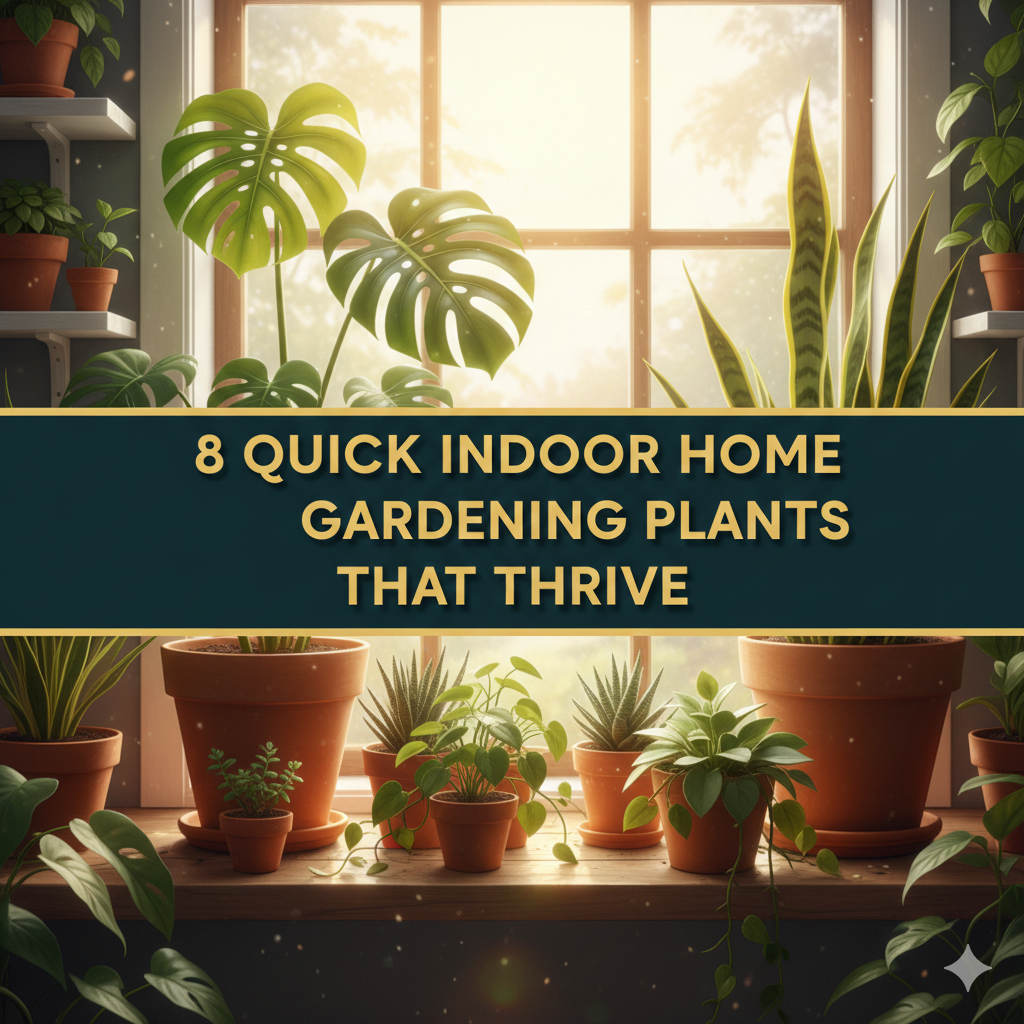
8 Quick Indoor Home Gardening Plants That Thrive
What Makes Speed So Important in Indoor Gardening
There’s nothing quite like seeing a plant grow—indeed, spring is truly magical. Many houseplants require months or even years before you notice much growth, but fast-growing indoor plants offer an antidote that’s evident within weeks.
Slam-cutters, they are ideally suited for the beginner who wants to get a result quickly. Works pretty well too if you’re decorating a new space and want greenery now, not in a year.
Fast-growing plants have another bonus. They tend to be lower maintenance. Plants that grow rapidly are generally more forgiving. This makes them great starter plants for the beginner indoor gardener.
You’ll learn here about eight awesome plants that will grow in a flash. Each one of them will add a little something to your home — be it dazzling leaves, air-cleansers or just the simple pleasure of observing rapid growth.
Pothos: The Speed Champion
Why Pothos Wins the Race
It may be no surprise people love Pothos (though in some parts of the country, especially Florida, it’s also called Devil’s Ivy) given that one of the fastest-growing and easiest to care for vines you can house inside. Provide adequate light and water regularly, and you will watch new leaves unfurl each week.
The vines have been known to grow an entire several feet in a matter of months. Some growers claim that they have plants growing 12 inches per month during their active growing season. That’s about 30 millimeters per day!
Simple Care Requirements
The pothos can live in almost any environment indoors. It tolerates low light better than other plants, but grows more quickly in bright, indirect light.
Water once the top inch of soil feels dry. The plant will let you know that it’s thirsty—a little droop to the leaves. Don’t worry, after you water it, the plant quickly bounces back.
This plant is incredibly forgiving. Forgot to water for a week? Pothos usually survives. Gave it too much water once? It recovers. This sturdiness makes it great for people on the go.
Display Ideas
Pothos makes a beautiful hanging basket plant and will trail along for many feet in that container. You could also train it to grow on a moss pole or allow it to trail along a shelf.
The best part? You’ll find that it’s really easy to create more plants from cuttings. Snip a stem with a couple leaves, place it in water, and roots will materialize within days.
| Aspect | Details |
|---|---|
| Growth Rate | Up to 12″ in a month |
| Light | Low to bright indirect |
| Water | When top inch is dry |
| Special Feature | Trails or climbs beautifully |
Spider Plant: Baby-Making Machine
The Plant That Will Not Die
Spider plants make it onto this list, however, because they do not just put out leaves, but actual baby plants known as “spiderettes.”
These little ones hang from long stalks turning them into waterfalls. Each baby can be planted to produce a new spider plant. It’s like having unlimited free plants!
The mother plant is also very fast growing. It grows from the center, via new leaves that shoot up in a fountain of sorts. A baby spider plant can easily double in size within a matter of months.
Beginner-Friendly Features
All but indestructible, spider plants simply refuse to die. They do well in a variety of light, from bright indirect to low.
They’re also forgiving with water. Though they do not like to dry out completely, their thick fleshy roots can store water and tolerate slight drought.
The brown leaf tips you are seeing are from chemicals in tap water. Switch to filtered water, or leave tap water out overnight before using it.
Air-Cleaning Superpower
The breathability of our homes is something NASA has experimented with for almost two decades, and it has found that spider plants help clear the air inside. They remove toxic formaldehyde and other pollutants, so your home is healthier.
Adorn your bedrooms, living rooms and workspaces with spider plants. They’re busy cleaning your air and looking pretty at the same time.
Tradescantia: The Colorful Speedster
A Rainbow of Growth
Tradescantia (Spiderwort, Inch Plant) Perhaps the most vibrantly-hued fast-grower on this list. The leaves are incredible purple, silver, green and pink.
The plant is christened inch plant because it grows so quickly. Some gardeners swear that it grows an inch a day, though that’s likely an exaggeration. The growth is still impressively speedy.
Trailing Beauty
These produce thick, trailing vines ideal for hanging baskets. The rainbow foliage will overlap eyes to cascade a beautiful waterfall.
The colors remain bright as long as there’s plenty of light. Under less light, the plants will still grow but may lose some of their bright colors and become more green.
Care Basics
Keep the soil moist, but not waterlogged. Tradescantia is actively growing in spring and summer so it requires more water during these months.
Pinch the tips of growth back regularly. This promotes a bushier shape so the plant does not become leggy. Plus, those clippings root easily in water or soil.
The plant appreciates higher humidity. If your house is dry, mist the leaves every now and then or put the pot on a humidity tray.
| Care Element | Specs |
|---|---|
| Light | Bright indirect best color |
| Water | Keep lightly moist |
| Humidity | Moderate to high (50%+) |
| Pruning | Pinch tips for fullness |
Lucky Bamboo: Not Actually Bamboo
Fast Growth in Water or Soil
Lucky bamboo isn’t actually bamboo at all. It’s a type of dracaena. But it grows astonishingly quickly, sometimes as much as a few inches in a month; for some people that pace slows down but doesn’t let up completely.
The best part of lucky bamboo is that it can thrive solely in water. No soil needed! It’s that simple, stick it in a vase with water and watch it grow.
Shaping Your Plant
You can shape lucky bamboo into spirals, braids or various other forms. The spirals you see in stores are formed by pointing the plant toward the light, which makes it grow in a curve.
If you would like to make your own shapes, it is a time-consuming task that requires a lot of patience, but is actually quite fun. You can also purchase pre-formed plants and delight in their unique form as they continue to grow up.
Simple Maintenance
Change out the water once a week to reduce algae and bacteria growth. And if your tap water is treated with fluoride or chlorine, it can harm the leaves: Use distilled or filtered instead.
Lucky bamboo likes bright, indirect light, but it also tolerates lower light levels. And too much direct sun can burn the leaves, causing them to yellow or brown.
Fertilize monthly with a few drops of liquid fertilizer. There are additional nutrients involved since it is growing in water and not soil, the site says.
Philodendron: The Heart-Leaf Wonder
Love at First Sight
Philodendron translates from the Greek as “love tree,” and what’s not to love about this fast-growing beauty? The leaves are heart shaped, shiny and a bright green.
The plant grows fast and needs little maintenance. It’s an excellent starter pattern for those looking to achieve a high-impact look without putting in tons of elbow grease.
There are two primary types of philodendrons: climbing and non-climbing. Both are relatively fast-growing but, with support, climbing sorts can be downright dramatic.
Growing Conditions
Bright, indirect light is best, but philodendrons will do better than many houseplants in low light. In dimmer light, the growth rate slows down but does not cease.
Allow the top two inches of soil to dry out before watering. When it needs water, the leaves will slightly droop, letting you know.
They like humidity, but are forgiving of regular home conditions. They are flexible and forgiving — which is why they’re popular.
Propagation Made Easy
Philodendrons root easily from cuttings. Trim beneath a node (the bump to which leaves are attached), stick in water, return within a week or two and roots will appear.
You can make several plants from one leggy specimen. This refresh keeps your plant looking full and hands you some extras to share with friends.
Snake Plant: Tough and Quick
The Nearly Indestructible Plant
Snake plants (also known as Mother-in-Law’s Tongue) are slow growers, and even though they surprise folks. If well taken care of, they grow full and send out new leaves frequently.
New leaves can grow for a few inches per week. A very small plant can grow into long, floor-reaching one in you within a year.
Extreme Tolerance
Snake plants thrive on neglect better than almost any other houseplant. They can withstand low light, erratic watering and temperature changes.
That makes them ideal for offices, bathrooms or that place where other plants cannot survive. They work well for the forgetful plant owner, too.
Air-Purifying Champion
Snake plants are also good for purifying the air indoors, just like spider plants. They are especially effective at eliminating formaldehyde and benzene.
One of its unique characteristics is that it emits oxygen at night, and purifies air in the process. Among other plants that are ideal for bedrooms because they only produce oxygen during the day.
Growth Tips for Maximum Speed
Want your snake plant to grow quickly? Give it bright, indirect light. Though it’s tolerant of low light, it grows faster with more light.
Water sparingly. Water only when the soil has completely dried out. Overwatering is the number-one way to kill a snake plant, because it leads to root rot.
| Factor | Impact on Growth |
|---|---|
| Light | More light = more growth |
| Water | Once soil is completely dry |
| Fertilizer | Once in growing season |
| Temperature | Prefers 60-80°F |
Peace Lily: Elegant and Speedy
Graceful Growth
Peace lilies are both beautiful and rapid growers. They continuously grow new leaves and will rebloom several times a year if you take good care of them.
The white “flowers” (in reality modified leaves known as spaths) are present year-round. Every flower lasts some weeks and adds beauty for a long time.
Low-Light Champion
Peace lilies rank among the best plants for low light. They thrive in locations where other plants would wither.
This makes them ideal for indoor rooms, windowless offices or dim nooks. They enliven spaces that desperately want green.
Watering Signals
Peace lilies are Water Histrionics 101. When the plant is thirsty, it droops as if dying. Don’t panic! Water fully and it rebounds in hours.
This is the clear signal that tells me when to water. No guesswork, no moisture meters — the plant tells you clearly when it’s thirsty.
The soil should be kept moist but not waterlogged. In the summer, you may need to water twice a week. For example in the winter once a week would do.
Air Cleaning Power
According to a NASA clean air study, peace lilies also take ammonia, benzene, formaldehyde and trichloroethylene out of the air.
This makes them perfect for bathrooms, the laundry room and other rooms with chemical cleaners. They work while looking elegant.
Jade Plant: The Money Tree
Slow and Steady? Not Really!
Jade plants are known for being very slow growing, but with proper care, they can take off surprisingly quickly.
Jade plants can double in size within a year. They grow thick, woody trunks rapidly and have a miniature tree-like growth pattern.
Succulent Simplicity
Like succulents, jade plants hold water in thick leaves. That’s good because they tolerate neglect well, especially if you’re busy or travel a lot.
Good growth requires bright light and will help keep leaves compact and green. Jade Plants in low light grow leggy and pale.
Easy Propagation
Drop a jade plant leaf on dirt, and it often grows roots. This one is almost too easy to spread. Every leaf has the power to be its own plant.
This is why jade plants are so easy to share. From a mother plant, you can make dozens of plants.
The Good Luck Factor
Jade plants are considered to be auspicious in Chinese culture. They’re known as “money trees,” and are frequently given as gifts to new businesses.
Whether or not you believe in the good luck of plants, jade plants certainly have a cheerful look with their bright green leaves and small tree shape.
| Growth Aspect | Specifications |
|---|---|
| Light | Bright, direct light |
| Water | Every 2-3 weeks; allow to dry completely |
| Growth Habit | Faster growing than most succulents |
| Special Care | Very easy to take care of |
Taking Your Plants to the Next Level
Light: The Growth Engine
The light is the most essential element for your plant’s growth. It’s literally plant food — they use the energy of light to create their own food via photosynthesis.
The reason is that more light (to the extent each plant can absorb it) promotes faster growth. If your plants don’t appear to be moving, chances are they need more light.
Windows that face south offer the brightest light. For most plants, east or west windows are excellent. There is less light in North windows.
Can’t provide enough natural light? Grow lights work great. LED grow lights are relatively inexpensive and economical once in use due to their low power draw. Even a simple grow bulb in a desk lamp works.
Fertilizer: The Growth Booster
Fertilizer is the same as vitamins for plants. They do not strictly require it but with it they grow so much better.
Fertilization: Feed monthly with a balanced liquid fertilizer when actively growing (Spring and Summer). Prune back to every other month, or stop all together in fall and winter.
Always cut back the recommendation on your fertilizer to 1/2. It’s more risk free to feed little and often than to feed too much, which may damage roots.
Humidity: The Secret Weapon
Many fast-growing tropical plants are lovers of humidity. They develop more rapidly and appear healthier in a damp environment.
If your house is dry (especially in the winter, when heating can make things even drier), another go-to tip for increasing humidity:
Group plants (They make some of their own humidity)
Stand pots on trays of pebbles and water
Use a humidifier near your plants
Mist does come and go from time to time (though this is a temporary situation)
Temperature Consistency
The majority of indoor plants like temperatures between 65 and 75 degrees. The temperature will affect how the plant grows and functions, too.
Don’t set plants close to heating vents, air conditioners or drafty windows. Plants are stressed by temperature fluctuations that stunt growth.
The Pot Matters
Plants grow better when they have space for their roots. A pot-bound plant gets stunted or stops growing altogether.
Determine whether the roots are circling the bottom of the pot or extruding from drainage holes. If so, it may be time to transplant into something a wee bit larger.
Don’t go too big, though. For one thing, a too-abundant pot will retain an excess of water and create the conditions for root rot. Go up just one or two sizes.
Common Mistakes That Slow Growth
Overwatering: The Silent Killer
More plants are killed with kindness (too much water) than neglect (too little). Overwatering can drown roots and lead to rot.
Be sure to test the moisture level of your soil before watering. Put your finger an inch into the soil. If it’s still damp, hold on another few days.
Ensure pots have drainage holes. They are not designed to retain water in the pot; they should let it run out of the bottom. Soggy soil equals dead roots.
Insufficient Light
If your plants are leaning toward the windows, with long spaces between leaves, or pale in color, they need more light.
If you can’t offer brighter natural light, supplement with a grow light. Even just a few hours of supplemental light make a world of difference.
Neglecting Nutrition
Soil nutrients are rapidly depleted, especially by vigorous plants. Lacking new nutrients, growth grinds to a halt.
Feed regularly through the growing season. Feed with a balanced fertilizer that contains nitrogen (for leaves), phosphorus (for roots) and potassium (for overall health).
Ignoring Pests
Inspect plants for pests such as spider mites, aphids or mealybugs. These sap-suckers deplete plants of energy and retard growth.
Treat them when you can still do something about them. Keep leaves clean, and wipe them down regularly to spot problems.
Frequently Asked Questions
What’s the fastest growing indoor plant known to man?
More often than not, pothos wins: Its tendrils can grow up to 12 inches per month under ideal conditions. Next up might be tradescantia, which can put on an inch a day in the peak of its season.
Do fast-growing plants really use more water?
Not necessarily. Growth rate is determined more by the plant species than by water level. Overwatering plants causes them more often to die than underwatering. Soil-moisture-based water, not watering on a set schedule.
Is there a way to make these plants grow faster?
And you can turn conditions to your advantage to assist plants in growing at maximum natural speed. Give all the sunshine, feeding, stability of temperature and moisture that it wants. But it’ll hardly turbocharge a naturally slow-grower.
How often to fertilize a rapidly growing plant?
Fertilize with liquid food every 2-4 weeks from spring through summer (the growing season). Cut back or stop feeding in fall and winter, when growth slows as a matter of course.
Why would my fast-growing plant suddenly stop growing?
Some common causes are: light is deficient, soil nutrients have been exhausted, the plant has bound roots, seasonal dormancy (normal in winter) or pests. Try checking each of those factors and see if that is the problem.
Do faster-growing plants require more care?
In fact, it’s typically the reverse! Plants that grow quickly are typically more forgiving and thus better for beginners. They’re inherently vigorous and will recover quickly from small care mistakes.
Should I prune fast-growing plants?
Yes! Regular pruning keeps plants bushy and full rather than leggy and sparse. It also provides you with cuttings to propagate new plants. Otherwise, you can prune in the growing season for optimal results.
Can I get cuttings to grow these plants?
All eight of the plants in this article are easy to propagate from cuttings. And this is a huge benefit – you can make unlimited free plants from the ones you’ve already got.
Your Green Journey Starts Now
It’s pretty impressive how quickly fast-growing indoor plants can turn empty rooms into lush jungles. They bring instant satisfaction while teaching the essential gardening basics.
Begin by picking one or two plants on this list. Pothos and spider plants are practically foolproof picks for complete beginners. Once you’re feeling more confident, you can add some other types to keep things diverse.
And keep in mind that even fast-growing plants need a few weeks. Don’t be discouraged if growth appears glacial initially. A newly planted tree or shrub often needs a few weeks to settle in at its new home before it hits the ground running.
Have fun along the way. Look for new leaves, celebrate growth milestones and learn from any setbacks. You learn something important from each plant about indoor gardening. If you’re just starting out with indoor gardening, check out more helpful tips and guides at Home Gardening Beginners.
Before long you’ll have more plants than you can handle. And that’s when the real joy starts — giving your plants to friends and relatives. Nothing is quite so sweet of a gift as the one that grows healthily on from your mother plant.
Your indoor garden awaits. Choose a plant, start growing and witness the magic. And before you know it, you’ll be adrift in lush greenness that would not exist without your own two hands.