
4 Home Gardening Tools I Regret Not Using Sooner
There’s a particular kind of hindsight that only comes with time spent in a garden. It doesn’t arrive all at once. It shows up gradually—after a season of trial and error, after a few failed plants, after sore hands and uneven growth and too many hours spent doing things the hard way.
Most people assume better results come from better seeds, better soil, or more sunlight. And yes, those matter. But what often gets overlooked is how much the right tools shape the entire experience. Not just the outcome, but the process itself—how long tasks take, how consistent your care becomes, and whether you actually enjoy doing it.
Looking back, there are a few tools I wish I had started using much earlier. Not because they are expensive or advanced, but because they quietly solve problems you don’t even realize you’re creating for yourself.
This isn’t a list of must-have tools for everyone. It’s a reflection—four tools that, once I started using them regularly, made me question why I waited so long.
soil moisture meter
For a long time, watering felt like guesswork. I relied on surface-level signs—the color of the soil, how dry it looked, or simply sticking a finger in and hoping that was enough. Sometimes it worked. Often, it didn’t.
What I didn’t realize was how misleading surface moisture can be.
What changed after using it
A soil moisture meter gives a reading from beneath the surface, where roots actually live. That small shift—from guessing to knowing—completely changed how I approached watering.
Instead of watering on a schedule, I started watering based on need.
Moisture reading interpretation table
| Reading Range | Soil Condition | Recommended Action |
|---|---|---|
| 1–3 | Dry | Water immediately |
| 4–7 | Moist | No action needed |
| 8–10 | Wet | Avoid watering |
Impact on plant health
| Before Using Meter | After Using Meter |
|---|---|
| Overwatering common | Balanced watering |
| Yellowing leaves | Healthier foliage |
| Root rot issues | Strong root systems |
| Inconsistent growth | Steady development |
What I regret
The biggest regret isn’t just the wasted water—it’s the plants that struggled unnecessarily. Many issues I tried to fix with fertilizers or repositioning were actually just watering mistakes.
A simple tool could have prevented that.
long-handled watering wand
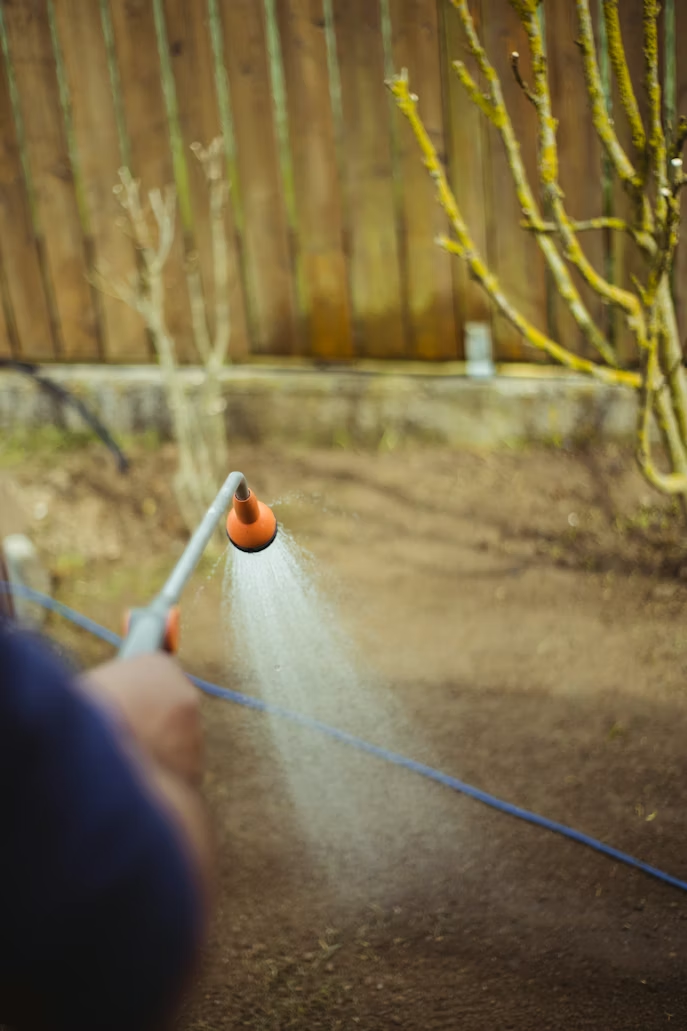
Watering used to be a rushed task. I’d use a hose or pour water quickly, thinking the job was done. But the results were inconsistent—some plants thrived, others didn’t.
The problem wasn’t effort. It was control.
What makes it different
A watering wand allows you to direct water exactly where it’s needed—at the base of the plant—while keeping the flow gentle.
That matters more than it sounds.
Watering method comparison
| Method | Water Control | Leaf Wetting | Soil Disruption |
|---|---|---|---|
| Hose (direct) | Low | High | High |
| Bucket pouring | Very Low | Medium | High |
| Watering wand | High | Low | Low |
What improved
- Less water splashing onto leaves (reducing disease risk)
- More even soil moisture
- Easier access to crowded plants
Time efficiency chart
| Task Type | Without Wand | With Wand |
|---|---|---|
| Watering beds | Slower | Faster |
| Reaching corners | Difficult | Easy |
| Precision watering | Low | High |
What I regret
I used to think a watering tool was just a container or hose. I didn’t realize how much delivery method matters. Plants respond differently when water reaches them gently and consistently.
pruning shears (quality pair)
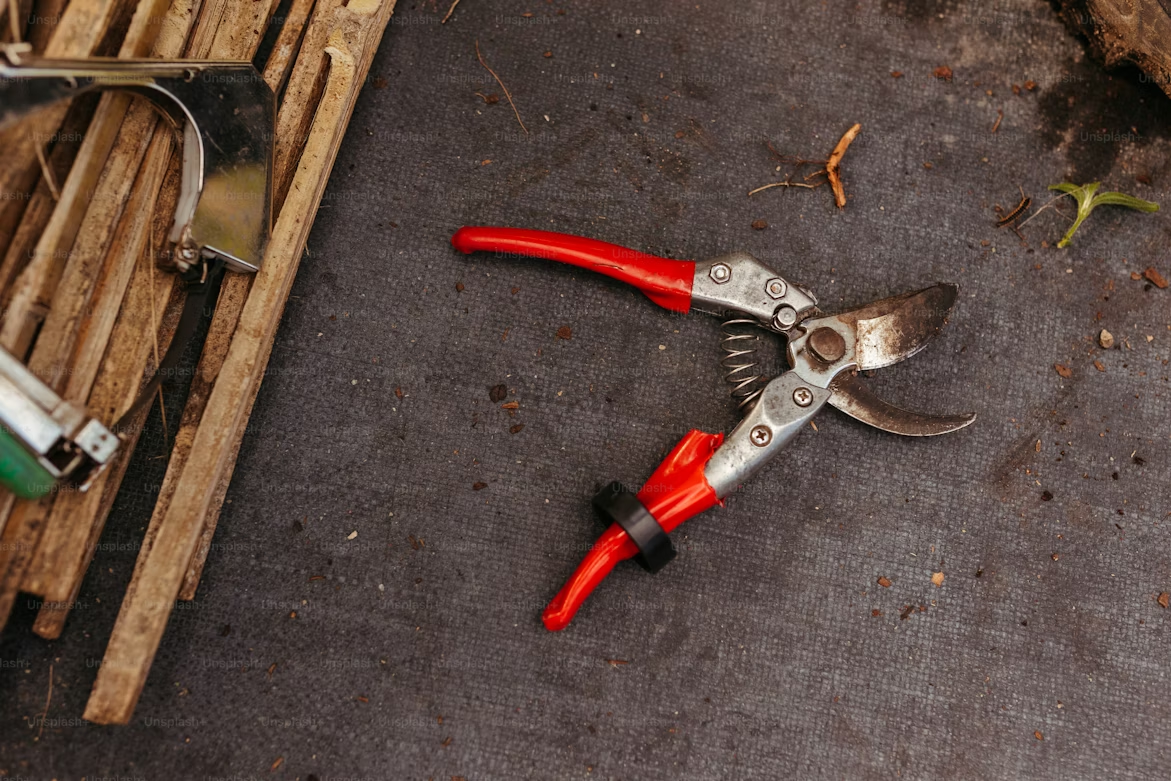
I had pruning shears early on—but they were dull, stiff, and frustrating to use. Eventually, I stopped using them unless absolutely necessary.
That turned out to be a mistake.
What changed with a better pair
A sharp, smooth pair of pruning shears doesn’t just cut—it transforms how you maintain plants.
Instead of avoiding pruning, I started doing it regularly.
Pruning effect comparison
| Condition | Poor Tool Result | Quality Shears Result |
|---|---|---|
| Stem cuts | Jagged, crushed | Clean, precise |
| Plant recovery | Slow | Faster |
| Growth pattern | Irregular | Controlled |
| Disease risk | Higher | Lower |
Unexpected benefits
- Plants became fuller and more productive
- Harvesting became easier and cleaner
- Maintenance felt less like a chore
What I regret
I underestimated how much poor tools discourage good habits. It wasn’t that I didn’t want to prune—I just didn’t want to deal with the effort.
Once the tool improved, the habit followed.
garden kneeler or kneeling pad
This one took the longest to adopt. It felt unnecessary at first—almost like an accessory rather than a real tool.
That assumption didn’t last.
The hidden problem
Gardening involves repetitive strain: kneeling, bending, crouching. At first, it’s manageable. Over time, it adds up.
Without realizing it, I was cutting sessions short because of discomfort.
What changed after using it
A simple kneeling pad made it possible to stay in one place longer, focus better, and work more carefully.
Comfort vs productivity table
| Factor | Without Kneeler | With Kneeler |
|---|---|---|
| Session duration | Short | Longer |
| Knee strain | High | Low |
| Focus level | Reduced | Improved |
| Task completion | Partial | Complete |
Long-term impact
- More consistent gardening routine
- Better attention to detail
- Less fatigue after sessions
What I regret
I used to think discomfort was just part of gardening. It isn’t. Small adjustments in comfort can completely change how often—and how well—you work.
combined impact of all four tools
Individually, each of these tools solves a specific problem. Together, they reshape the entire gardening experience.
Workflow improvement chart
| Task Stage | Before Tools | After Tools |
|---|---|---|
| Checking soil | Guesswork | Accurate measurement |
| Watering | Inconsistent | Controlled |
| Maintenance | Irregular | Routine |
| Work comfort | Limited | Sustainable |
What stands out isn’t just efficiency—it’s consistency. And consistency is what gardening depends on most.
why these tools are often overlooked
They’re not flashy
None of these tools look impressive or high-tech. They don’t promise dramatic results. But they quietly improve everyday tasks.
They solve subtle problems
Overwatering, uneven cuts, discomfort—these aren’t always obvious issues. So people don’t look for solutions right away.
They don’t feel urgent
It’s easy to think, “I can manage without this.” And you can—but not as effectively.
lessons learned the hard way
Waiting too long to upgrade tools often leads to:
- Repeating the same mistakes
- Spending more time on simple tasks
- Losing motivation due to frustration
In many cases, the issue isn’t lack of effort—it’s lack of the right support.
simple decision guide
If you’re unsure whether these tools are worth it, consider this:
| Problem You Face | Tool That Helps |
|---|---|
| Unsure when to water | Soil moisture meter |
| Uneven watering | Watering wand |
| Poor plant growth | Pruning shears |
| Physical discomfort | Kneeling pad |
final thoughts
There’s no perfect time to upgrade your gardening tools. Most people wait until something goes wrong—plants struggle, time runs short, or the work becomes tiring.
Looking back, these four tools didn’t just improve results. They made gardening feel smoother, more predictable, and more enjoyable.
If there’s one takeaway, it’s this: small changes in how you work can lead to big changes in what you grow.
And sometimes, the difference isn’t in the soil or the seeds—but in what you’re holding in your hand.
FAQs
- Do I really need a soil moisture meter for home gardening?
Not necessarily, but it helps remove guesswork and can significantly improve watering accuracy, especially for beginners. - Is a watering wand better than a regular hose?
Yes, because it provides better control and reduces the risk of overwatering or damaging plants. - How often should I prune plants with pruning shears?
It depends on the plant type, but regular light pruning is generally better than occasional heavy cutting. - Are kneeling pads worth it for small gardens?
Yes, even in small spaces, they improve comfort and allow longer, more focused work sessions. - Can I use cheap versions of these tools?
Yes, as long as they are functional and reasonably durable. Quality matters more than price, but you don’t need premium options. - Which of these tools should I buy first?
Start with the one that addresses your biggest current problem—watering, pruning, or comfort.