
7 Pro Home Gardening Tools Experts Use Daily
There’s a noticeable shift that happens when someone moves from casual gardening to a more serious, consistent practice. It’s not just about growing more plants or expanding space—it’s about precision, efficiency, and understanding how small improvements in process lead to better results over time. One of the most overlooked aspects of that transition is the choice of tools.
Professionals—whether they maintain home gardens, small nurseries, or urban farms—don’t necessarily rely on expensive or flashy equipment. What they use daily are tools that save time, reduce strain, and improve plant health in subtle but meaningful ways. These tools become extensions of their hands, and over time, they shape the way work is done.
This article takes a closer look at seven pro-level home gardening tools that experts rely on every day. These are not gimmicks or luxury add-ons. Each tool earns its place through repeated use, practical value, and measurable impact.
soil knife (hori hori)
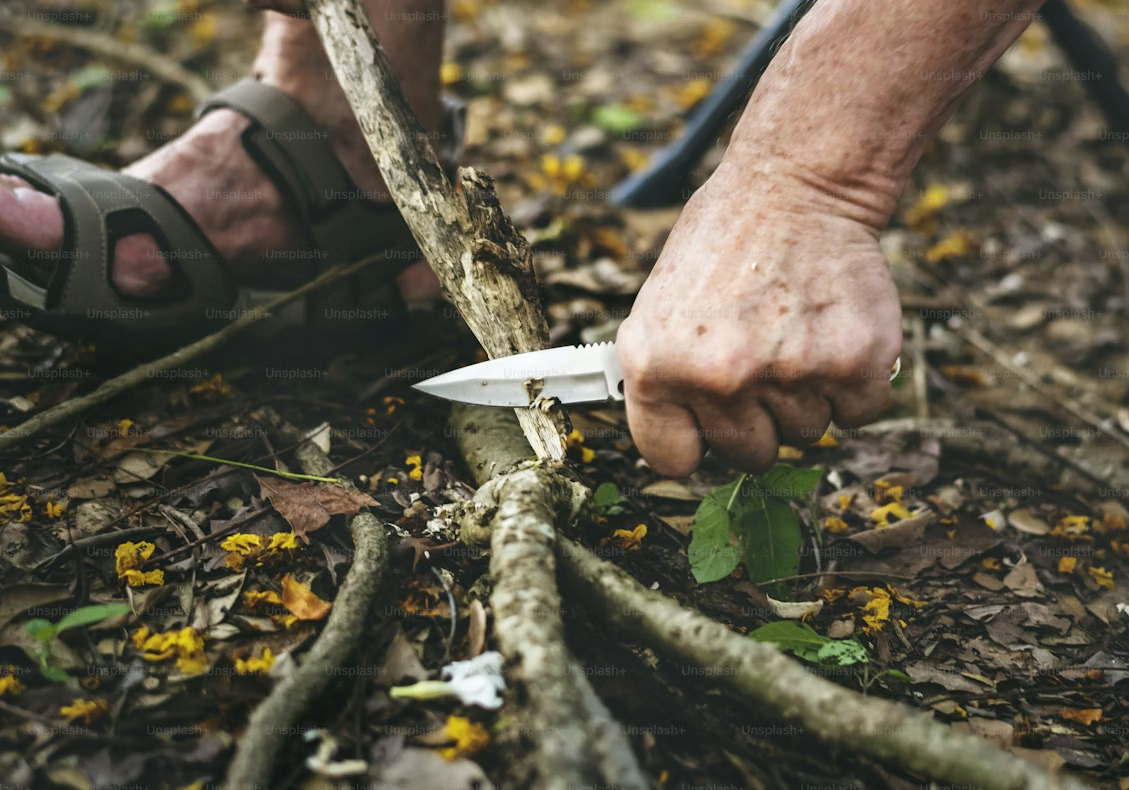
At first glance, a soil knife looks like a hybrid between a knife and a small shovel. But in practice, it’s one of the most versatile tools a gardener can own.
What makes it indispensable
Experts use a soil knife for digging, cutting roots, dividing plants, transplanting, and even measuring planting depth (many models have measurement markings). Its serrated edge allows it to slice through compact soil or stubborn roots that would otherwise slow down the process.
Why professionals prefer it
Instead of switching between multiple tools, a soil knife handles several tasks in one motion. This reduces time spent reaching for different tools and keeps workflow uninterrupted.
Functional comparison
| Task | Soil Knife Efficiency | Traditional Tool | Efficiency |
|---|---|---|---|
| Cutting roots | Very High | Pruners | Medium |
| Digging small holes | High | Trowel | High |
| Weeding (deep roots) | High | Hand weeder | Medium |
| Transplanting | High | Trowel | High |
Practical insight
Gardeners who work in dense or clay-heavy soil often find that a soil knife replaces both a trowel and a weeder. Over time, it becomes the most frequently reached-for tool.
bypass pruning shears
Pruning shears are common, but not all are created equal. Professionals almost always favor bypass pruners over anvil-style ones.
What sets them apart
Bypass pruners use two curved blades that slide past each other, creating a clean cut. This is essential for plant health, as clean cuts heal faster and reduce the risk of disease.
Daily use cases
- Deadheading flowers
- Harvesting vegetables
- Trimming herbs
- Removing damaged growth
Impact on plant performance
| Plant Type | Poor Cutting Tool Result | Bypass Pruner Result |
|---|---|---|
| Tomato plants | Crushed stems | Clean cuts, faster recovery |
| Roses | Torn edges | Smooth pruning, better blooms |
| Herbs | Uneven growth | Controlled regrowth |
Why experts stick with them
Consistency matters. A reliable pair of pruning shears ensures every cut contributes positively to plant structure and productivity.
long-handled watering wand
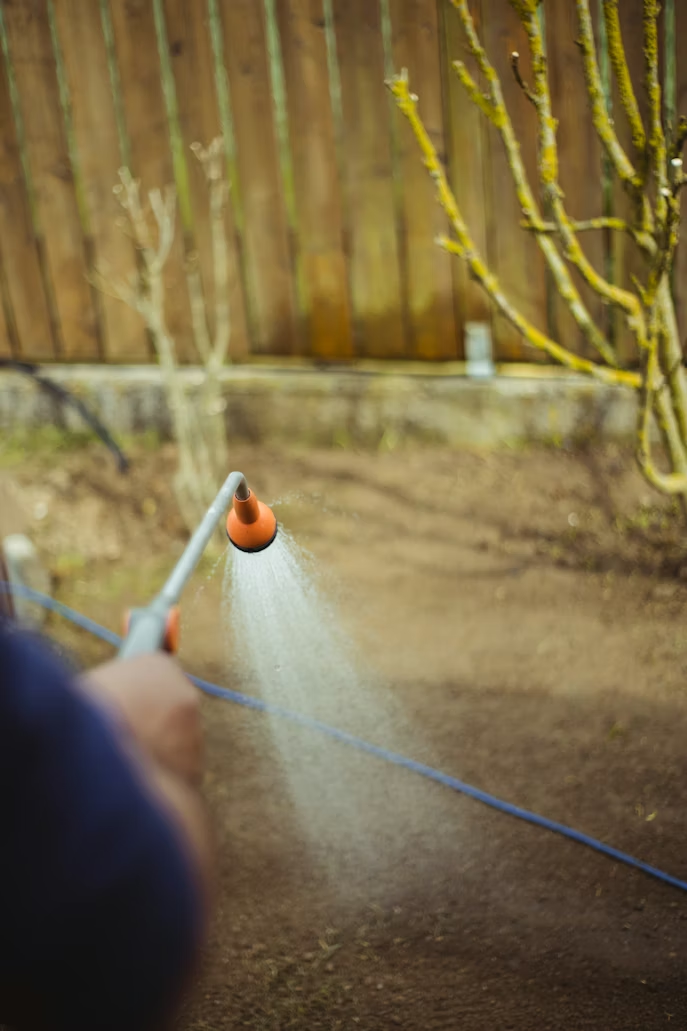
Watering is often underestimated, but professionals treat it as a precise and controlled activity rather than a routine chore.
What it does differently
A watering wand attaches to a hose and extends reach, allowing gentle watering at soil level without disturbing plants.
Key advantages
- Reduces water splash on leaves (important for disease prevention)
- Allows access to dense or hard-to-reach areas
- Provides adjustable pressure for different plant needs
Watering control comparison
| Method | Precision | Plant Safety | Water Efficiency |
|---|---|---|---|
| Hose (direct) | Low | Low | Medium |
| Bucket | Very Low | Low | Low |
| Watering wand | Very High | Very High | High |
Professional insight
Experts often water early in the morning and use a wand to direct water exactly where it’s needed—at the root zone, not on foliage.
garden fork (hand or full-size)
A garden fork is one of those tools that quietly does heavy work without drawing much attention.
Primary functions
- Loosening compact soil
- Turning compost
- Aerating garden beds
- Mixing organic matter into soil
Why it matters
Healthy soil is the foundation of successful gardening. A fork improves soil structure without overly disturbing microbial life, unlike aggressive digging tools.
Soil improvement chart
| Soil Condition | Without Fork Use | With Regular Forking |
|---|---|---|
| Compaction | High | Reduced |
| Drainage | Poor | Improved |
| Root penetration | Limited | Enhanced |
| Microbial activity | Uneven | Balanced |
Daily relevance
Even light use—just a few minutes per bed—can significantly improve long-term soil quality.
kneeling pad or garden kneeler
This might not seem like a “tool” in the traditional sense, but professionals consider it essential.
Why it’s used daily
Gardening involves repetitive movements—kneeling, bending, and crouching. Over time, this can lead to discomfort or injury.
Benefits
- Reduces strain on knees and joints
- Allows longer working sessions
- Improves posture while working close to the ground
Work efficiency comparison
| Condition | Without Kneeler | With Kneeler |
|---|---|---|
| Work duration | Short | Extended |
| Comfort level | Low | High |
| Precision tasks | Difficult | Easier |
Professional perspective
Comfort directly affects productivity. When physical strain is reduced, focus and attention to detail improve.
hand cultivator
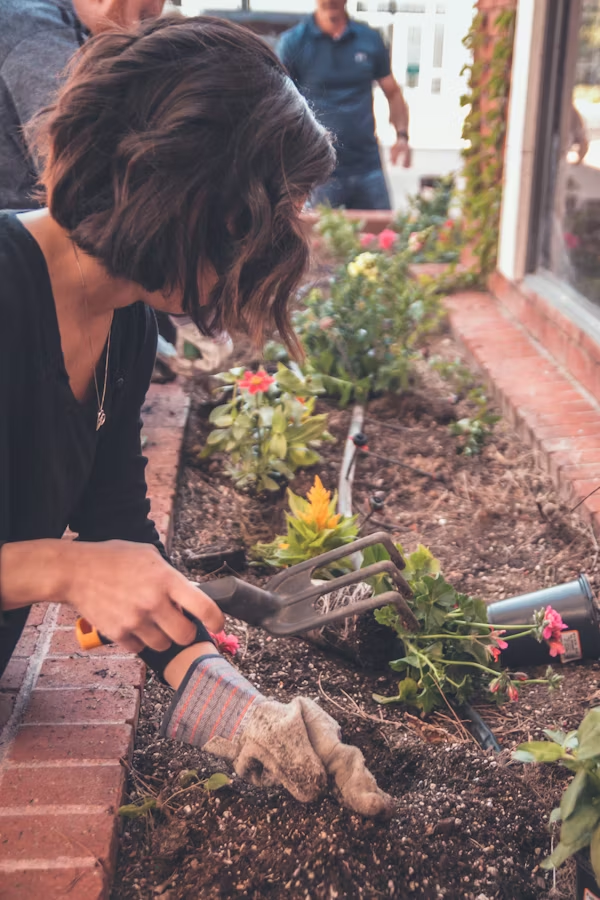
A hand cultivator is a small, claw-like tool designed for precision soil work.
Where it excels
- Breaking up topsoil
- Removing weeds
- Mixing fertilizers or compost
- Preparing planting areas
Why experts rely on it
It allows targeted soil work without disturbing surrounding plants. This is especially useful in densely planted beds.
Weed control efficiency
| Method | Root Removal | Soil Disturbance |
|---|---|---|
| Pulling by hand | Low | Low |
| Hoe (large) | Medium | High |
| Hand cultivator | High | Medium |
Usage insight
Professionals often use cultivators after watering, when soil is softer and easier to work with.
spray pump (pressure sprayer)
A spray pump is a step up from a basic spray bottle. It’s designed for consistent and efficient application of liquids.
Common uses
- Applying organic pesticides
- Feeding plants with liquid fertilizers
- Treating fungal issues
- Cleaning leaves
Why it stands out
Unlike manual spray bottles, a pressure sprayer maintains consistent output, covering more area in less time.
Application efficiency chart
| Tool | Coverage Area | Consistency | Effort Required |
|---|---|---|---|
| Spray bottle | Small | Medium | High |
| Pressure sprayer | Large | High | Low |
Professional advantage
Uniform application ensures that treatments are effective without overuse or waste.
how these tools work together in a daily routine
A professional gardener’s day isn’t about using one tool—it’s about combining them efficiently.
Typical workflow example
| Task चरण (Stage) | Tool Used | Purpose |
|---|---|---|
| Soil prep | Garden fork | Loosen and aerate soil |
| Fine prep | Hand cultivator | Break surface and remove weeds |
| Planting | Soil knife | Dig and position plants |
| Maintenance | Pruning shears | Trim and shape plants |
| Watering | Watering wand | Controlled hydration |
| Treatment | Spray pump | Apply nutrients or pest control |
| Extended work | Kneeling pad | Maintain comfort |
This integrated approach is what separates casual gardening from professional-level efficiency.
mistakes people make when upgrading to pro tools
Buying everything at once
Many assume that professional gardening requires a large investment upfront. In reality, experts build their toolkit gradually based on need.
Ignoring ergonomics
A tool that performs well but causes discomfort won’t be used consistently.
Overlooking maintenance
Even the best tools lose effectiveness if not cleaned, sharpened, or stored properly.
Choosing complexity over simplicity
Tools with too many features often go unused. Professionals prefer reliable, straightforward designs.
maintenance practices experts follow
- Cleaning tools after each session to prevent buildup
- Sharpening blades regularly for clean cuts
- Storing tools in dry, shaded areas
- Checking handles and joints for wear
A simple habit like wiping tools down after use can extend their life significantly.
why these tools make a difference over time
The real advantage of professional tools isn’t immediate—it’s cumulative.
Over weeks and months, you’ll notice:
- Healthier plants due to precise care
- Reduced time spent on routine tasks
- Less physical strain during gardening
- More consistent growth and yields
These small improvements add up, turning gardening into a smoother and more rewarding process.
final thoughts
Professional gardeners don’t rely on luck or guesswork. Their results come from consistent practices supported by reliable tools. The seven tools discussed here aren’t just popular—they’ve earned their place through daily use and proven effectiveness.
For anyone looking to improve their gardening experience, adopting even a few of these tools can make a noticeable difference. It’s not about owning more tools—it’s about using the right ones, in the right way, at the right time.
FAQs
- Do I need all seven tools to garden effectively?
No, you can start with a few essentials and gradually add more based on your needs. Each tool serves a specific purpose, so prioritize what fits your gardening style. - Are professional gardening tools expensive?
Not necessarily. Many pro-level tools are affordable and offer long-term value due to durability and efficiency. - How do I maintain pruning shears for long-term use?
Clean them after use, keep the blades sharp, and occasionally oil the joints to ensure smooth operation. - Can beginners use these tools easily?
Yes, most of these tools are beginner-friendly. With a little practice, they can significantly improve gardening results. - What is the most versatile tool on this list?
The soil knife is often considered the most versatile due to its ability to handle multiple tasks like digging, cutting, and transplanting. - How often should I replace gardening tools?
Replacement depends on wear and maintenance. Well-maintained tools can last for years, even with regular use.