

9 Home Gardening Tools That Changed My Routine
There was a time when my gardening routine felt more like a series of chores than something I genuinely looked forward to. I would head outside with good intentions, only to get bogged down by repetitive tasks, small frustrations, and the constant feeling that everything took longer than it should. It wasn’t that I didn’t enjoy gardening—I did—but the process itself often felt inefficient.
Over the years, that changed. Not because I suddenly became more skilled or disciplined, but because I gradually discovered tools that reshaped how I worked. Some of them were simple. Others were things I initially dismissed as unnecessary. But together, they transformed my routine from slow and reactive to smooth and almost effortless.
This article is not about trendy gadgets or overhyped gear. It’s about nine tools that made a real, noticeable difference in my day-to-day gardening life. If you’ve ever felt like your routine could be better—but weren’t sure how—this might help you rethink a few things.
soil moisture meter
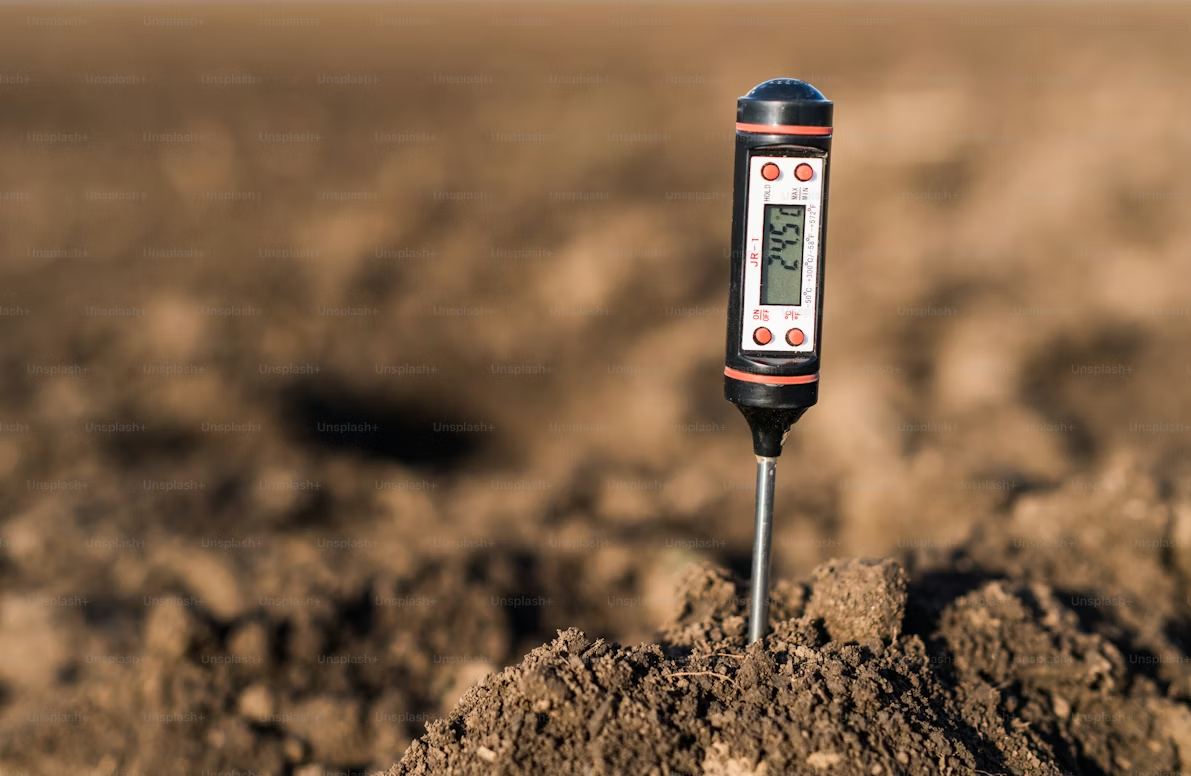
The first real shift in my routine came when I stopped guessing about watering.
For years, I relied on instinct. I would touch the soil, look at the leaves, or simply water on a schedule. It worked sometimes, but not consistently. Plants would occasionally wilt or show signs of stress, and I would react after the fact.
A soil moisture meter changed that dynamic completely.
Instead of reacting, I started responding to actual data. I could check moisture levels in seconds and decide whether watering was necessary. It sounds simple, but it removed one of the biggest uncertainties in gardening.
moisture reading interpretation
| Reading | Condition | What I Do Now |
|---|---|---|
| 1–3 | Dry | Water immediately |
| 4–6 | Slightly moist | Check again later |
| 7–10 | Wet | Leave it alone |
routine impact
| Before | After |
| Frequent checking | Quick checks |
| Overwatering risk | Rare mistakes |
| Reactive care | Preventive care |
ergonomic hand tools
I didn’t realize how much energy I was wasting until I switched to ergonomic tools.
My old tools were functional, but uncomfortable. After 20–30 minutes, my hands would feel sore, and I would start rushing through tasks just to finish quicker.
Switching to tools with better grips and balanced weight made everything smoother.
key differences
| Feature | Old Tools | Ergonomic Tools |
| Grip | Hard, basic | Soft, cushioned |
| Control | Average | Precise |
| Fatigue | High | Low |
time and energy effect
| Task | Before Time | After Time |
| Planting | 35 min | 25 min |
| Pruning | 30 min | 20 min |
| Weeding | 45 min | 30 min |
The biggest difference wasn’t speed—it was how I felt afterward.
garden kneeler and seat
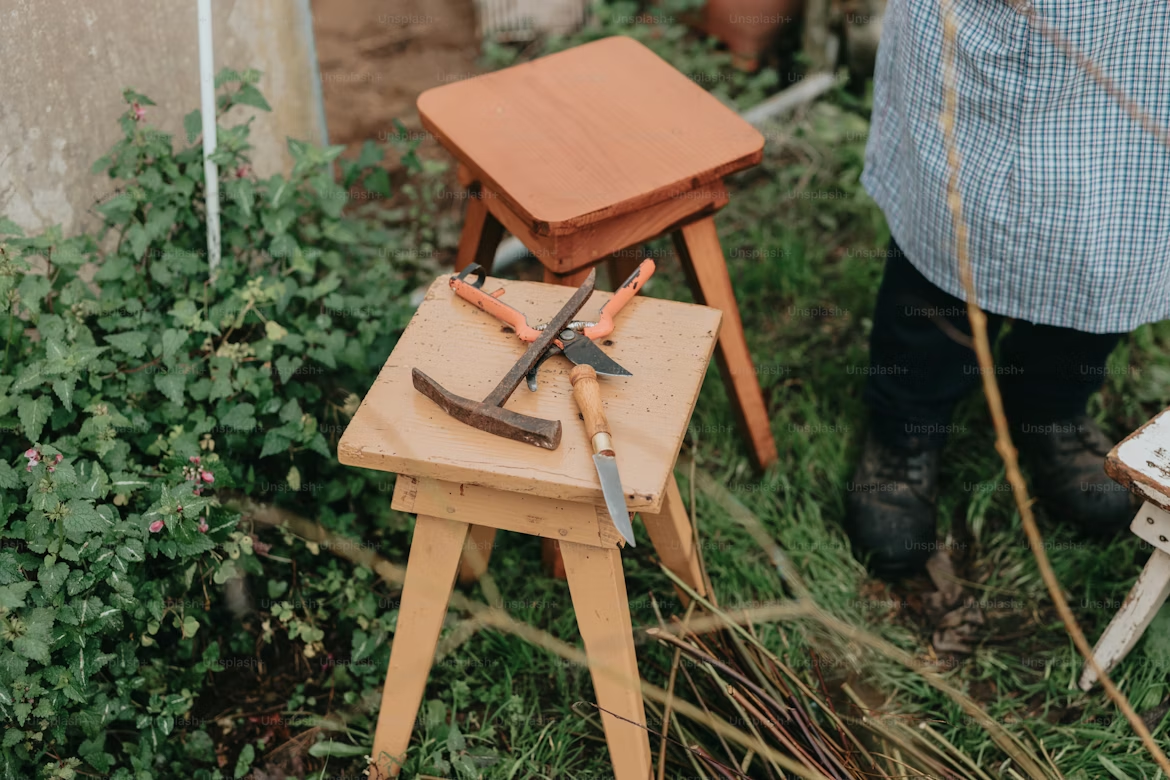
This tool changed how long I could comfortably stay in the garden.
Before using a kneeler, I would constantly shift positions, stand up frequently, or avoid tasks that required extended kneeling. It broke my workflow.
With a kneeler and seat, I could stay focused longer without discomfort.
comfort comparison
| Factor | Without Kneeler | With Kneeler |
| Knee strain | High | Low |
| Back strain | High | Reduced |
| Work duration | Short | Extended |
routine shift
Instead of working in short bursts, I started completing tasks in one go. That alone saved time and mental effort.
expandable garden hose
Watering used to be one of the most frustrating parts of my routine. The hose would kink, get tangled, or feel too heavy to move easily.
An expandable hose solved all of that.
hose comparison
| Feature | Traditional Hose | Expandable Hose |
| Weight | Heavy | Light |
| Flexibility | Limited | High |
| Storage | Time-consuming | Quick |
workflow improvement
| Task | Before | After |
| Setup | 5–10 minutes | 1–2 minutes |
| Movement | Restricted | Easy |
| Storage | Slow | Fast |
It removed friction from a task I do almost daily.
handheld garden sprayer
This is one of those tools I underestimated for a long time.
I used to apply fertilizers and pest control solutions manually using makeshift methods, which were inconsistent and messy.
A handheld sprayer brought precision.
benefits
- Even distribution
- Less waste
- Faster application
usage efficiency
| Task | Without Sprayer | With Sprayer |
| Fertilizing | Uneven | Consistent |
| Pest control | Spotty | Thorough |
| Time required | Longer | Shorter |
It made plant care more controlled and less guess-based.
pruning shears (high quality)
Not all pruning shears are equal. I learned that the hard way.
Cheap shears made rough cuts, damaged stems, and required more effort. Upgrading to a high-quality pair changed how quickly and cleanly I could prune.
cut quality comparison
| Aspect | Low-Quality Shears | High-Quality Shears |
| Cut precision | Rough | Clean |
| Effort | High | Low |
| Plant impact | Stressful | Healthy |
routine impact
Pruning became quicker, and plants recovered faster. It’s one of those upgrades that pays off over time.
soil scoop
A soil scoop seems like a minor tool, but it made planting and repotting much faster.
Before, I used small containers or my hands, which was messy and inefficient.
With a scoop:
- Soil transfer became cleaner
- Planting was quicker
- Spillage reduced significantly
efficiency comparison
| Task | Without Scoop | With Scoop |
| Repotting | Slow | Fast |
| Soil handling | Messy | Clean |
| Precision | Low | High |
It’s simple, but surprisingly impactful.
garden cart or wheelbarrow
Carrying tools, soil, and plants back and forth used to take a lot of time.
A garden cart reduced multiple trips into one.
transport efficiency
| Task | Without Cart | With Cart |
| Moving soil | Multiple trips | One trip |
| Carrying tools | By hand | Organized |
| Time spent | High | Reduced |
routine change
Less walking back and forth meant more time actually working on plants.
smart plant monitor
This was the most modern addition to my routine, and it added a layer of insight I didn’t have before.
A smart plant monitor tracks:
- Light exposure
- Soil moisture
- Temperature
- Humidity
data-driven gardening
| Parameter | Without Monitor | With Monitor |
| Light | Estimated | Measured |
| Watering | Guesswork | Accurate |
| Plant care | Reactive | Proactive |
It helped me understand why certain plants struggled—and what to adjust.
how these tools reshaped my routine
Individually, each tool solved a specific problem. Together, they created a smoother workflow.
daily routine comparison
| Step | Before | After |
| Checking plants | Time-consuming | Quick and precise |
| Watering | Inconsistent | Efficient |
| Maintenance | Physically tiring | Comfortable |
| Cleanup | Messy | Organized |
The biggest change wasn’t just time saved—it was mental clarity. I spent less time figuring things out and more time enjoying the process.
time savings overview
| Tool | Time Saved Weekly |
| Moisture meter | 1–2 hours |
| Ergonomic tools | 1–2 hours |
| Kneeler/seat | 1 hour |
| Expandable hose | 1 hour |
| Sprayer | 30–60 minutes |
| Pruning shears | 30–60 minutes |
| Soil scoop | 30 minutes |
| Garden cart | 1–2 hours |
| Plant monitor | 1 hour |
Total estimated time saved: 7–12 hours per week.
what i would do differently
If I were starting over, I wouldn’t wait as long to upgrade my tools.
I would:
- Invest in comfort earlier
- Focus on efficiency, not just cost
- Pay attention to small frustrations
Because those small frustrations add up.
faqs
- do i need all these tools to start gardening?
No, you can start with basic tools. But adding these over time can significantly improve your routine. - which tool makes the biggest difference?
A soil moisture meter and ergonomic tools usually have the most immediate impact. - are smart gardening tools necessary?
Not necessary, but they provide useful insights that can improve plant care. - how do i choose quality tools?
Look for durability, comfort, and good reviews rather than the cheapest option. - can these tools be used in small gardens?
Yes, most of these tools are suitable for both small and large gardening spaces. - do these tools really save time?
Yes, especially when combined. They reduce repetition, improve efficiency, and streamline tasks.
Gardening will always require patience and care. But it doesn’t have to feel inefficient or exhausting. The right tools don’t just make tasks easier—they change how you approach the entire process.
And sometimes, the biggest transformation comes not from doing more, but from doing things smarter.