Why Starting Your Garden Doesn’t Have to Be Scary
If those stunning gardens you see on social media make you think, “I could never do that,” then we’re here to prove you wrong.
Here’s the reality: Every master gardener was once right where you are now.
It may seem daunting to start a home garden. There are so many plants to choose from. Watering schedules sound confusing. And what if it all just dies?
But gardening doesn’t have to take a green thumb or years of experience. You only need the right basics.
In this guide, I will share seven home gardening tips beginners should know in order to be successful. These are not complicated theories or fancy techniques. They’re easy and proven, no-nonsense ways to grow something beautiful for anyone with a bit of outdoor space.
Let’s dig in.
Tip 1: Choose the Perfect Spot Before You Plant Anything
Location is more important than you think.
Your plants need the perfect amount of sun. The majority of vegetables and flowers require at least 6 to 8 hours of direct light each day. Sun-loving tomatoes will flounder in a shady corner no matter how well you care for them.
Finding Your Garden’s Sweet Spot
Stroll through your yard at different times of day. Pay attention to which spots receive morning sun, afternoon sun or stay shaded all day.
Morning sun is gentler. Afternoon sun is more intense.
Here’s what different plants need:
| Plant Type | Sunlight Requirement | Best Location |
|---|---|---|
| Tomatoes, Peppers | Full sun (6-8 hours) | South |
| Lettuce, Spinach | Partial shade (3-4 hours) | East |
| Ferns, Hostas | Shade (Less than 3 hours) | North |
| Herbs (Basil, Rosemary) | Full sun (6-8 hours) | South or West |
Also check for water drainage. Step in your preferred place after a rain. Does water pool there? That’s bad for most plants. The roots will rot in standing water.
Seek areas where water naturally drains in a few hours.
What About Container Gardens?
Don’t have yard space? No problem.
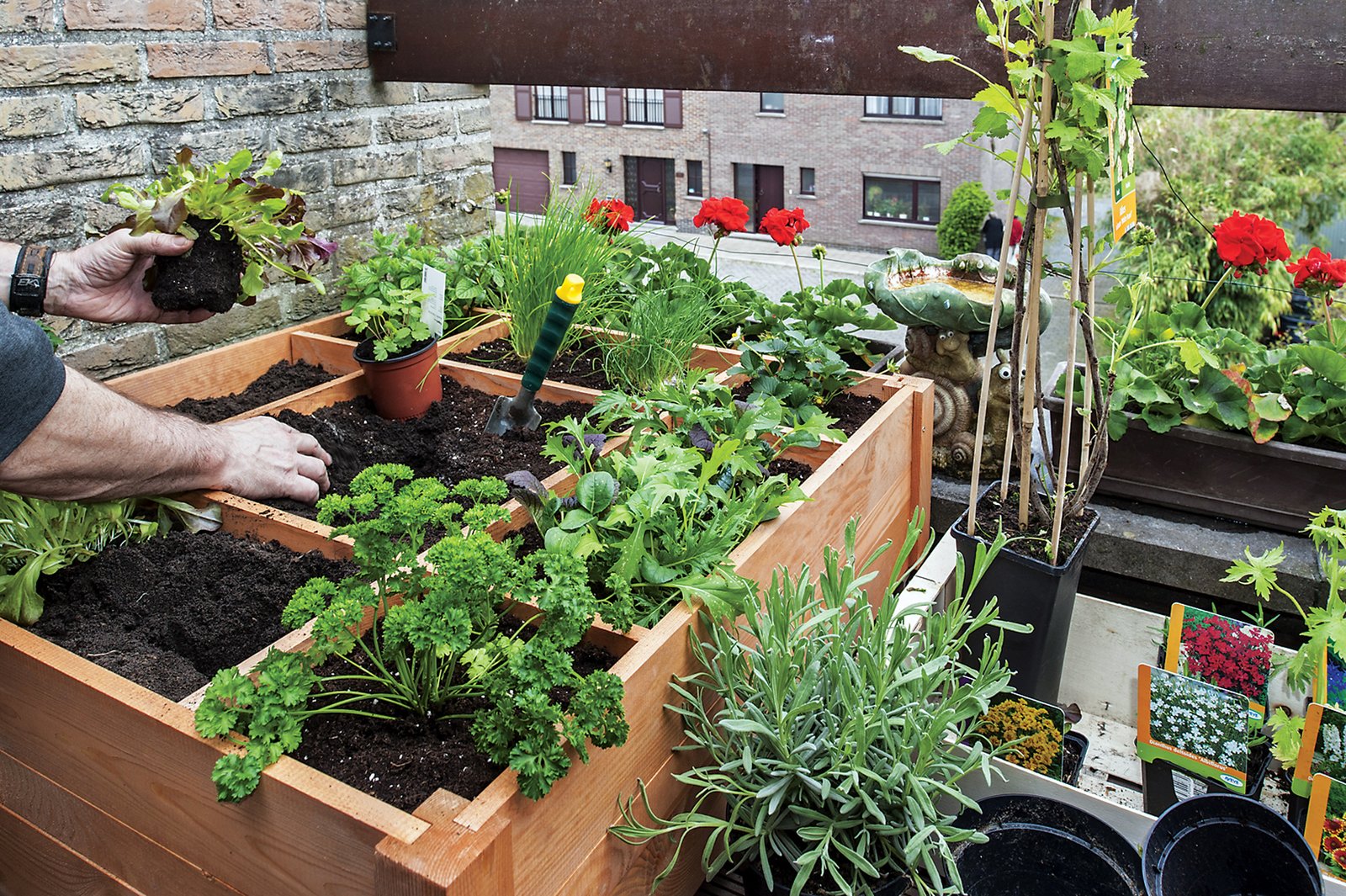
Containers are perfect for beginners. You can shift them around to get the light just right. Balconies, patios, even windowsills work well.
However, make sure that your containers have drainage holes at the bottom.
Tip 2: Begin With Forgiving, Easy Plants
All plants are not created equal.
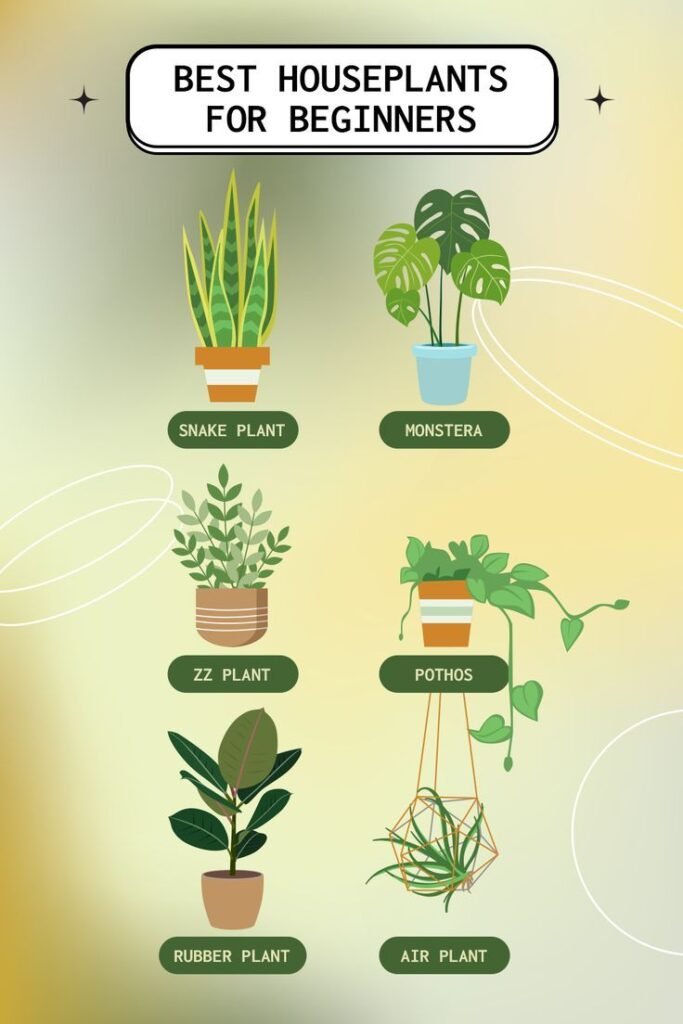
Some plants are drama queens. They require optimal conditions — or they will bail on you. Then there are those plants that just keep pushing through, growing even when you forget to water them for a few days.
The Best Beginner-Friendly Plants
Start with these reliable winners:
For Vegetables:
- Cherry tomatoes (they produce a whole lot)
- Lettuce (fast growing, ready in 30 days)
- Radishes (ready to harvest in 3-4 weeks)
- Beans (pole varieties climb to conserve space)
- Zucchini (one plant feeds a household)
For Flowers:
- Marigolds (bright, cheerful, and bug-resistant)
- Sunflowers (tall, dramatic, and easy)
- Zinnias (colorful blooms all summer)
- Petunias (perfect for containers)
For Herbs:
- Basil (smells amazing, grows quickly)
- Mint (practically grows itself)
- Parsley (tolerates partial shade)
These are plants that forgive beginners. Forgot to water? They’ll recover. Planted them a bit too deep? They’ll still grow.
Plants to Avoid Your First Year
Save these for later:
- Roses (require regular pruning and disease control)
- Orchids (very picky about conditions)
- Melons (require lots of space and precise timing)
You’ll get there eventually. Just not today.
Tip 3: Premium Soil Is Your Secret Weapon
Here’s what many newcomers don’t know: healthy soil means healthy plants.
You can’t just dig a hole in your yard and expect something spectacular. The soil in most yards is either too sandy (drains too rapidly) or too clay-heavy (doesn’t drain quickly enough).
The Three Ingredients for Perfect Soil
Great garden soil has three things:
Texture – Mix of sand, silt and clay with good drainage and moisture retention
Nutrients – Food that plants need to grow
Organisms – Beneficial bacteria and worms that live in the soil, keeping it healthy
How to Improve Any Soil
The magic ingredient is compost.
Compost is decomposed organic matter. It looks like dark, crumbly dirt that has an earthy (not rotten) smell. You can purchase it at any garden center or make your own from kitchen scraps.
Before you plant, mix compost into the soil:
For garden beds: Add 2 to 3 inches of compost, then work it into the top 6 inches of soil
For pots: Use potting mix (NOT garden soil) loaded with everything plants need
Simple Soil Improvement Timeline
| How Long Before Planting | Action | Why It Matters |
|---|---|---|
| 2-4 weeks | Add compost | Gives it time to mix with existing soil |
| 1 week | Turn soil with shovel | Aerates and distributes nutrients |
| Planting day | Water soil first | Creates ideal moisture for new roots |
The Squeeze Test
Want to check whether your soil is ready? Take a handful of it and squeeze.
Good soil will form a soft ball that crumbles when you poke it. Too sandy? It won’t form a ball. Too much clay? It stays in a tight ball.
Keep adding compost until you get it right.
Tip 4: Water Deeply, but Not Too Often
What kills most beginners’ plants is kindness. They water every day, believing that more is better.
It’s not.
Frequent, shallow watering keeps roots shallow. When you miss a day, plants suffer because their roots never had to search deep for water.
The Deep Watering Method
Water plants less often, but when you do, give them a good soaking.
Push your finger into the soil about 2 inches deep. If it feels dry at that level, water. If it still feels damp, wait another day.
When you water, drench the soil so that water runs out the bottom of containers or penetrates 6 inches deep in garden beds.
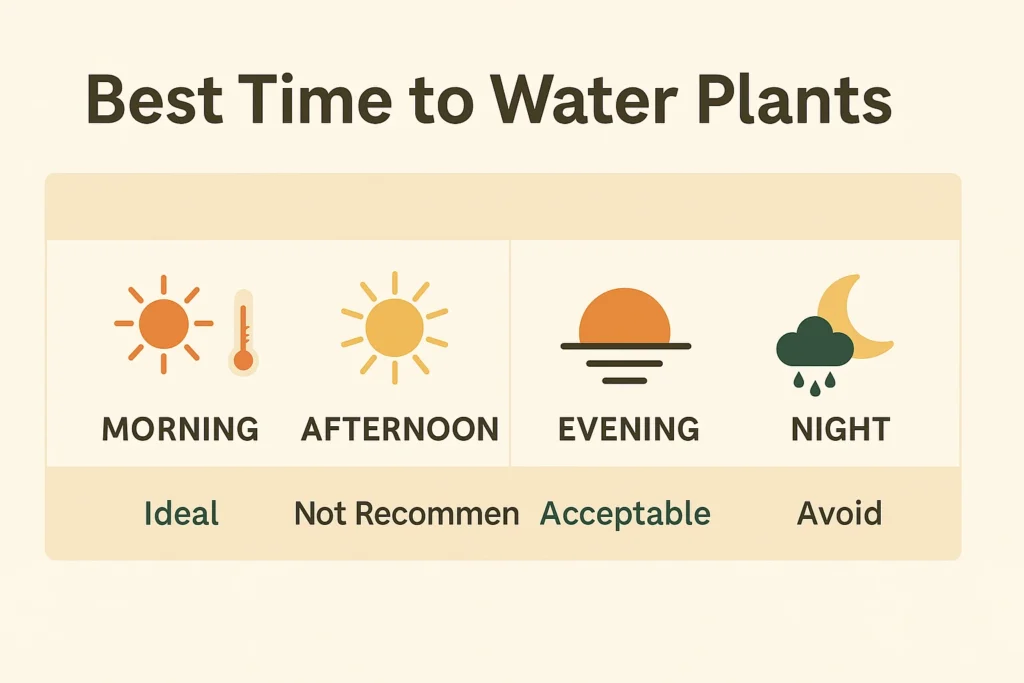
Best Times to Water
Early morning is ideal. The air is cool and water can be absorbed before the day warms.
Evening is fine, but wet leaves overnight can make plants vulnerable to disease.
Never water during hot midday. Water quickly evaporates before plants can drink it, and wet leaves can burn in strong sun.
How Much Water Do Plants Really Need?
This depends on your plant and the weather:
| Condition | Watering Frequency | Amount |
|---|---|---|
| Hot, sunny weather | Every 2-3 days | 1 inch of water |
| Mild weather | Every 4-5 days | 1 inch of water |
| Rainy periods | Do not water | Let nature work |
| New seedlings | Daily (light) | Keep soil moist |
| Established plants | Every 3-4 days | Deep watering |
One inch of water means the soil is wet 6 inches deep. You can measure this by placing an empty tuna can in your garden while watering. When it’s full, you’ve applied one inch.
Tip 5: Feed Your Plants the Right Diet
Plants have to eat, too.
Just like you want healthy food, your plants need nutrients to grow strong and productive.
The NPK Numbers Explained Simply
Each fertilizer bag features three numbers such as 10-10-10 or 5-10-5. These tell you the proportion of three important nutrients:
- N (Nitrogen) – Helps leaves grow healthy and green
- P (Phosphorus) – Supports the growth of roots and flowers
- K (Potassium) – Strengthens overall plant health
Different plants need different ratios.
Leafy greens, such as lettuce, require more nitrogen. Tomatoes and flowers benefit from extra phosphorus when blooming.
Easy Fertilizing Schedule for Beginners
Don’t overthink this.
Start with a balanced fertilizer (the numbers are equal, such as 10-10-10). Follow the package directions. Most will advise you to fertilize once every two to four weeks during the growing season.
Container plants require more frequent feeding since water flushes nutrients out the drainage holes. Feed them once a week with half-strength fertilizer.
Garden bed plants started with good compost can go longer between feedings.
The Organic vs. Synthetic Choice
Organic fertilizers are made from natural sources, such as composted manure. They’re slow-release and help improve soil over time.
Synthetic fertilizers are manufactured chemicals. They work more quickly, but don’t promote soil quality.
Both work fine for beginners. Choose whatever fits your budget and philosophy.
Tip 6: Give Plants Room to Breathe
It’s a rookie mistake to cram too many plants into a small space.
When you first plant tiny seedlings, it looks empty. You may be thinking, “I can squeeze one more tomato plant in here.”
Don’t do it.
Why Spacing Matters
Plants compete for:
- Sunlight (plants shade each other if crowded)
- Water (roots fight underground)
- Nutrients (everyone’s eating from the same soil)
- Air circulation (prevents disease)
Crowded plants become weak and stressed. Pests and diseases prey on stressed plants.
What Spacing Should You Use?
Refer to the seed packet or plant tag. It gives you the exact spacing needed.
Here are some common examples:
| Plant | Spacing Between Plants | Spacing Between Rows |
|---|---|---|
| Tomatoes | 24-36 inches | 36-48 inches |
| Lettuce | 6-8 inches | 12 inches |
| Carrots | 2-3 inches | 12 inches |
| Beans | 3-4 inches | 18-24 inches |
| Marigolds | 8-10 inches | 10-12 inches |
The Thin-Out Rule
If you direct sow seeds into the ground, they will need to be thinned.
Seeds are cheap, so seed packets tell you to sow generously. When they sprout, snip away the weakest seedlings to give strong ones room.
Yes, it feels wasteful. But those healthy survivors will produce way more growth than a crowd of weak plants ever could.
Tip 7: Watch Your Garden and Learn Plant Language
Plants don’t speak, but they certainly communicate.
Yellow leaves mean something. Droopy stems tell a story. Brown spots are your plant sending a message.
Being able to read those signs is the difference between losing a plant and saving it.
Common Plant Problems and Quick Solutions
Yellow Leaves (Lower Leaves)
- Cause: Not enough nitrogen
- Fix: Add nitrogen-rich fertilizer
Yellow Leaves (All Over)
- Cause: Overwatering or poor drainage
- Fix: Allow soil to dry, improve drainage
Brown Leaf Tips
- Cause: Not enough water or humidity
- Fix: Water more consistently
Holes in Leaves
- Cause: Insects eating your plants
- Fix: Pick visible bugs off by hand, spray with organic pest solution
Wilting Despite Wet Soil
- Cause: Root rot from overwatering
- Fix: Allow soil to dry completely, repot in fresh soil
Leggy, Stretched-Out Growth
- Cause: Not enough light
- Fix: Move plant to sunnier spot
Keep a Simple Garden Journal
You don’t need anything fancy.
Simply jot notes on your phone or in a notebook:
- When you planted
- When you watered
- When you fertilized
- What problems you noticed
- What worked well
By next season you’ll have a cheat sheet of exactly what worked in your particular garden.
Your First Garden Doesn’t Have to Be Perfect
The true secret of home gardening tips beginners need to know is this: you will make mistakes.
That’s okay. That’s actually how you learn.
Maybe you’ll overwater your first tomato. Perhaps a rabbit will eat your lettuce. It’s very possible that your zucchini could take over the whole garden (everyone’s plants do this).
Every single mistake teaches you something.
Start small. Choose only 3-5 plants your first season. Learn how they grow. Listen to what they need.
You’ll grow bigger and bolder next year.
The wonderful thing about gardening is that there’s always another season. Each spring offers new chances to try again, using the lessons you’ve learned to grow better plants.
Your garden is waiting. You have everything you need to get started right now.
For more detailed planting guides and seasonal tips, visit the USDA Plant Hardiness Zone Map and planting calendar.
Frequently Asked Questions
Q: How expensive is it to get started on a home garden?
A: You can start a small garden for $30-$50. This includes seeds, basic potting soil and a few containers. You don’t need fancy equipment. Reuse containers from around your house, and start with a few plants.
Q: When is the perfect time to begin gardening?
A: Early spring is normally best for most plants, after your area’s last frost date. But certain crops, like lettuce and spinach, thrive in fall too. Look up your local frost dates online for precise timing.
Q: I only have a balcony or patio, can I still garden?
A: Absolutely! Container gardening is ideal where space is limited. Tomatoes, herbs, peppers and lettuce all thrive in pots. Just be sure containers get plenty of sun.
Q: How frequently should I be checking my garden?
A: Inspect your garden every day, if possible — even for a few minutes. This allows you to spot problems early, see when plants need water and pick vegetables at their peak ripeness.
Q: Should I use pesticides?
A: Not necessarily. Many beginners have success with organic approaches such as hand-removing pests, using companion plants or applying neem oil sprays. Start with a chemical-free, organic approach and escalate only if you have serious pest problems.
Q: What if I travel a lot? Can I still have a garden?
A: Plant drought-tolerant varieties, install a basic drip irrigation system, or have a neighbor water while you’re away. Self-watering pots also keep plants alive during short trips.
Q: Should I start from seed or starter plants?
A: It’s easier to start with small plants, known as starter plants, especially for beginners. While more expensive than seeds, they give you a head start and are more forgiving of errors.
Q: How can I tell if my plant is getting too much (or too little) sun?
A: Too much sun: Bleached, dried or scorched leaves. Not enough sun: Plants stretch and become leggy, with sparse flowering or pale leaves. Gradually move plants to adjust lighting conditions.