Growing Big in Small Places
Having a small apartment doesn’t have to crush your dreams of growing food indoors.
Now, indoor gardening has become a craze in the trend and lifestyle of the people. Fresh herbs, vegetables and striking flowers are being grown in people’s homes — regardless of how much space they have.
And it’s not about having a big house or fancy gear. It’s all about working smart with the space that you have.
This guide reveals nine tried and tested strategies to get more plants growing in less space. These are not just theories — they’re tested tactics employed by thousands of thriving indoor gardeners who live in small apartments, studios, condos, tiny homes you name it!
Whether you want to raise your own food for the money savings, a fan of freshly cut herbs and cooking vegetables directly from indoors, or would simply like to grow plants inside, these indoor gardening tips will help bring new life into your home.
Here’s how to make a lush indoor garden without giving up your living space.
Why Space-Saving Indoor Gardening Matters
The fact is that modern homes and apartments are precious with space.
Many of us think of gardening as something that can take place only in a backyard or on a balcony. That’s simply not true anymore.
There are also the advantages of indoor gardening that can’t be matched on the outside:
- Grow all year-long no matter what the weather or season is
- Total control of light and temperature and humidity
- No pests such as slugs, rabbits or deer feeding on your plants
- Your own fresh herbs and veggies at your kitchen door
The trick is to have as much growing space as possible without turning your house into a jungle.
These nine tricks have that problem solved. They help you grow three, four or even five times as many plants within the same footprint.
Ready to stretch every square inch? Let’s dig in.
Tip 1: Use Wall-Mounted Planters
The greatest mistake a gardener makes indoors is one of horizontal thought.
Your walls are untapped, vast expanses of growing space. Each vertical foot you utilize increases your garden’s capacity exponentially.
Installing Vertical Garden Systems
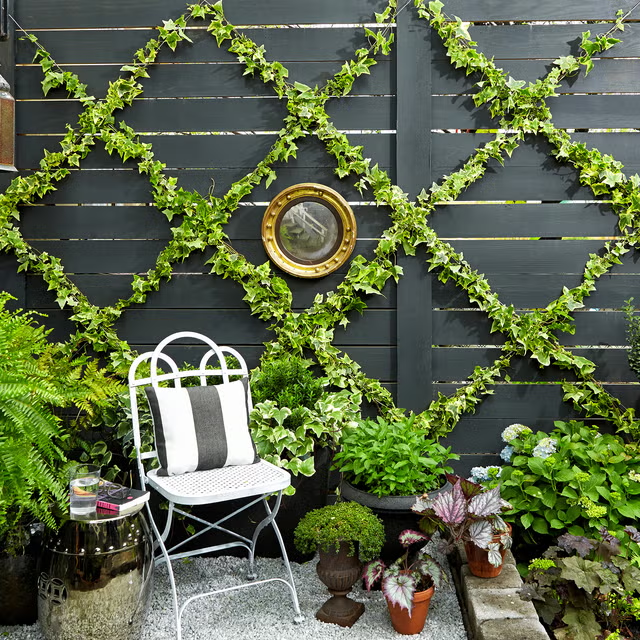
There are thousands of styles of wall-mounted planters. Plush felt or fabric pockets, designed to hang like tapestries. Modular boxes will be stacked, and connected how you’d like. Rail systems with hanging pots just lower and raise to any height.
Pick systems according to your wall type and rental reality. Some screw on with tiny screws to make them permanent. And others rely on removable adhesive strips that won’t damage painted walls.
Best Plants for Vertical Growing
Not all plants tolerate a vertical orientation well. Focus on these space-saving champions:
Herbs: Basil, parsley, cilantro and mint work well in shallow vertical pockets. Their short root structures require no deep soil.
Lettuce and greens: Spinach, arugula and romaine lettuce do well in vertical settings. Harvest the outer leaves as long as plants are still producing.
Strawberries: These lovely trailing plants will cascade like living waterfalls from vertical pockets and produce tasty fruit.
Vertical Garden Capacity Comparison
| Type | Floor Space Utilized | Number of Plants | Space Efficiency |
|---|---|---|---|
| Traditional Pots | 10 sq ft | 8-10 plants | Baseline |
| Wall-Mounted System | 2 sq ft floor | 20-30 plants | 300% more efficient |
| Stacked Tower | 1.5 sq ft floor | 25-35 plants | 400% more efficient |
Tip 2: Embrace Tiered Plant Stands
Ladder plant stands extend your growing space and allow you to have multiple levels of plants in the same footprint.
Think of them as vertical neighborhoods in which different species of plant live on different floors. This simple tactic can double or triple your range immediately.
Choosing the Right Stand Configuration
Corner stands: If you have limited room in your home or apartment a corner stand is an ideal way to not only store your plants but to fit into an empty corner. They generally have three to five levels and are in the shape of a triangle or fan.
Ladder-style stands: Rest against a wall and provide four to six levels of growing space. They’re excellent near windows for sun-loving plants.
Spinning stands: Allow you to rotate plants for even light. The round shape provides a tight fit to save space and display plants to perfection.
Strategic Plant Placement on Tiers
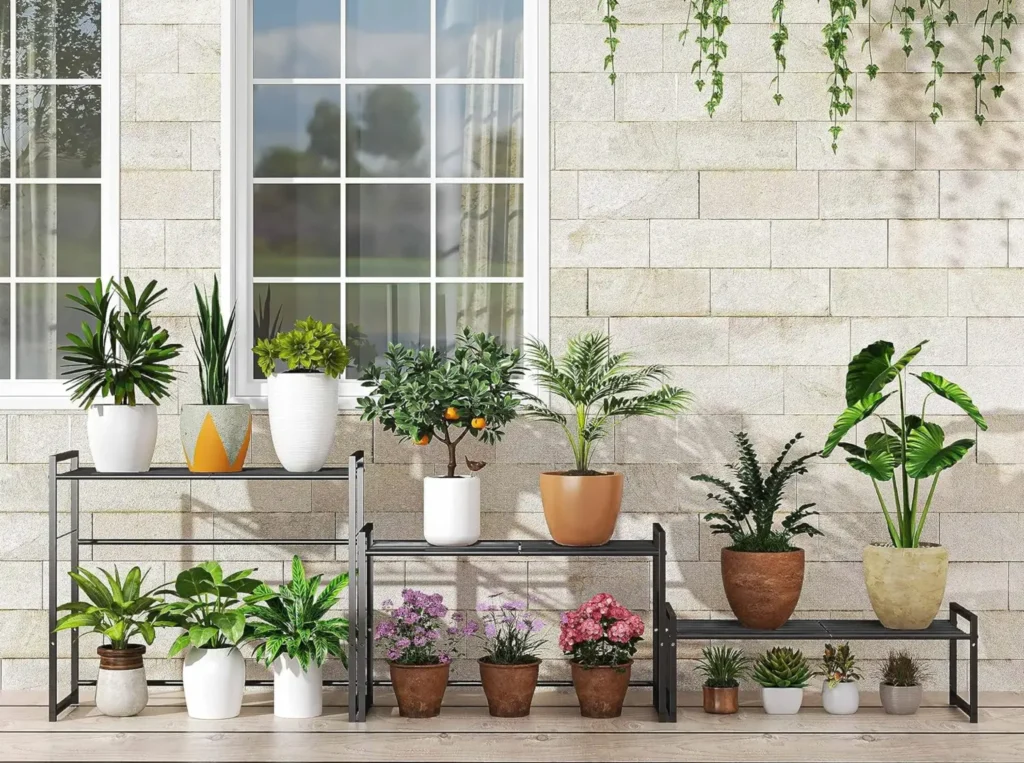
Plant strategically according to their requirements:
Top tier: Plant light-needing plants such as tomatoes, peppers and flowering plants where they get maximum sun.
Middle layers: Pack plants of medium light intensity like herbs and leafy greens.
Bottom tier: Make it a home for shade-tolerant plants, such as pothos, snake plant and ferns. Store supplies here too.
This configuration ensures each plant has maximum light exposure, while not wasting any vertical space.
Tip 3: Use Hanging Planters Anywhere & Everywhere
Hanging planters make use of airspace that is otherwise completely wasted.
Between the floor and ceiling of most rooms, an empty space hovers. Hanging baskets, macramé pot hangers and ceiling hooks make the dead zone productive garden space.
Strategic Hanging Locations
- By windows: Use sun-hungry herbs and vegetables in the strongest natural light
- Kitchen corners: Place hanging herb gardens where you can access with your hand from the cooking area
- Above furniture: Hang potted plants over a couch, desk or dining table. They also add beauty without taking up surface space
- Curtain rods: Hang from curtain rods that are already on your wall by hanging S-hooks from them
Best Plants for Hanging Gardens
Trailing and cascading varieties that look beautiful while making the most of space:
- Spider plants with their hanging leaves and baby offshoots
- Pothos with multiple feet of length on the trails
- Dramatic appearance string of pearls
- Cherry tomatoes (determinate varieties)
- Creeping herbs such as oregano or thyme
Weight Considerations
Make sure to always check how much weight can hang before trying new installations. A tomato plant filled out with wet soil is 10 to 15 pounds. Ceiling hooks can typically bear 15-30 pounds no problem.
Open studs in ceilings work for more heavy plants, and joist finders can help you locate them. Toggle bolts come in handy for drywall when studs are absent.
Tip 4: Use Multi-Level Shelving to Stack Plants
Shelving units result in tidy, productive growing stations.
Unlike plants placed at random, shelving designs optimize every cubic inch. They help keep plants neat while making it easy to care for and harvest them.
Metal Wire Shelving Advantages
The wire shelves are indoor gardening’s gold standard. Here’s why:
- Light penetration: Wire design allows light to reach lower shelves via see-through gaps
- Air flow: Open construction can prevent water pooling, and fungi growing problems
- Adjustability: All systems have shelves that adjust up or down in one-inch intervals
- Weight capacity: Industrial wire shelving supports 200 to 350 pounds per shelf
Adding Grow Lights to Shelving
Turn your ordinary shelving into a growing station with LED grow lights.
Attach the light to the underside of every shelf. This places lights just right over plants on the shelf below.
Herbs and greens do great with LED strips. They’re lightweight, energy efficient and heat up fewer coils.
For fruiting plants (like tomatoes and peppers) full spectrum panel lights are ideal. Place them 6-12 inches above the tops of your plants.
Shelving Layout Strategy
| Shelf Level | Recommended Usage | Light Type |
|---|---|---|
| Top Shelf | Starts, microgreens | Natural window light + LED |
| Middle Shelves | Herbs, lettuce, greens | LED grow lights |
| Bottom Shelf | Root veggies in containers, storage | LED grow lights |
Tip 5: Choose Dwarf Plant Varieties
The plants are a deal-maker, or deal-breaker, for some space-efficient indoor gardens.
Heirlooms are also indeterminate but tend to be a bit larger, growing on average 8-10 feet tall. Dwarf types yield the same crop in 18-24 inches. Such is the power of selection among varieties. For more guidance on selecting the right plants for your space, visit Home Gardening Beginners.
Dwarf and Bush Types for Growing
Modern breeding has produced dwarf forms of just about every favorite plants:
Tomatoes: “Tiny Tim,” “Window Box Roma” and “Red Robin,” which yield full-size fruit on plants of under 2 feet.
Peppers: ‘Lunchbox’ peppers and ‘Basket of Fire’ are compact while productive.
Cucumbers: ‘Spacemaster’ and ‘Bush Pickle’ are compact plants without sprawl that can grow in containers.
Carrots: Both ‘Paris Market’ and ‘Thumbelina’ yield round carrots ideal for containers.
Lettuce: Any leaf variety is great, because you harvest outer leaves as you need them.
Avoiding Space-Hogging Plants
Skip these indoor space wasters:
- Standard tomato varieties (indeterminate types)
- Full-sized pumpkins and winter squash
- Corn (requires too much mass for pollination)
- Big fruit trees (unless they are dwarf varieties)
Space Efficiency by Plant Type
Herbs (Basil, Parsley):
95 out of 100
Lettuce & Greens:
85 out of 100
Dwarf Tomatoes:
70 out of 100
Compact Peppers:
70 out of 100
Bush Cucumbers:
60 out of 100
Tip 6: Implement Succession Planting
If done correctly, succession planting will keep your garden going and producing all season long.
Instead of growing everything all at once, you plant in waves. This allows for continuous harvests, while utilizing space efficiently.
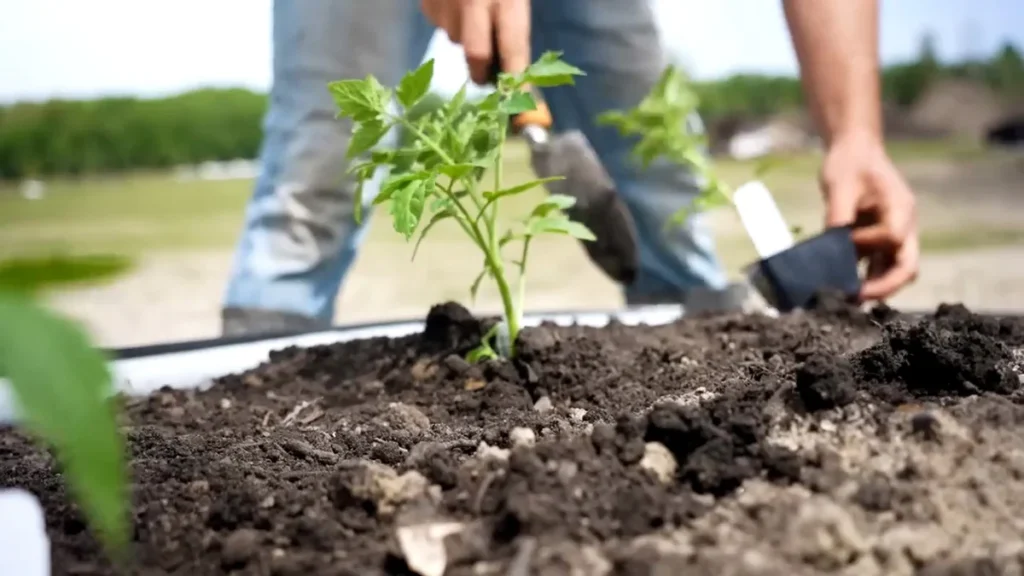
How Succession Planting Saves Space
Traditional gardening leaves gaps. You plant lettuce; you gather it all in, and the area comes into fallow while beginning anew.
Succession planting eliminates these gaps. As soon as you pull one crop out, another plant takes its place.
Creating a Succession Schedule
- Week 1: Plant lettuce row 1
- Week 3: Plant lettuce row 2
- Week 5: Plant lettuce row 3
- Week 7: Harvest row 1, sow seeds immediately in its place
- Week 9: Harvest row 2, plant again with seeds
- Week 11: Harvest row 3 and replant
This rotation delivers greens every two weeks forever.
Best Plants for Succession Growing
Fast-growing crops work perfectly:
- Lettuce (ready in 30-45 days)
- Radishes (ready in 25-30 days)
- Arugula (ready in 30-40 days)
- Spinach (ready in 40-50 days)
- Scallions (ready to harvest in 30-40 days)
- Microgreens (harvest in 7-14 days)
Tip 7: Space Saving Container Options
Space utilization is highly dependent on the choice of container.
Choosing the right pots means you can fit more plants into the same space without crowding and compromising health and productivity.
Fabric Grow Bags
Fabric pots can be collapsed when empty, saving on storage space. Compared to ceramic or terracotta, they weigh next to nothing.
The breathable fabric avoids overwatering ensuring your plant roots stay healthy and happy. Roots will also naturally “air prune” themselves which dramatically increases root mass and overall plant health.
The sizes of these fabric bags are between 1 gallon to over 20 gallons. For inside space-saving, keep to the 3-5 gallon sizes for most plants.
Window Boxes and Railing Planters
These special containers can be attached directly to a windowsill or hang from any rail. They take up growing space but no floor area.
Newer window boxes have self-watering reservoirs and require less upkeep. Busy indoor gardeners need this.
Self-Watering Containers
Self-watering pots have built-in reservoirs for several days’ worth of moisture. Plants are watered by wicking systems, as necessary.
Benefits for space-saving gardens:
- Less watering equals more free time
- Even watering is key to healthy, compact plants
- Vertical stack up to multiple units with no water run off
Container Size Chart for Common Plants
| Plant Type | Min Container Size | Optimal Container Size |
|---|---|---|
| Herbs | 0.5-1 gallon | 1-2 gallons |
| Lettuce/Greens | 0.5-1 gallon | 1-2 gallons |
| Dwarf Tomatoes | 3 gallons | 5 gallons |
| Peppers | 2 gallons | 3-5 gallons |
| Strawberries | 1 gallon | 2 gallons |
Tip 8: Potted Gardens On Wheels
Mobility unlocks incredible space-saving potential.
Plants in transit relocate based on light needs, to make room for activities, or to accommodate seasonal temperature variations.
Building Rolling Plant Stands
Use plant caddies with locking wheels for heavy pots. These round or square bases support decent weight but they roll well.
For bigger installations, construct custom rolling benches. Take some 2x4s to make a frame, attach a plywood top, and put in some heavy duty casters.
The Chase-the-Sun Strategy
Mobile gardens allow you to chase optimal light, day and year round.
- Morning: For some early sun, roll plants to east-facing windows
- Afternoon: Relocation to south or west windows for direct light
- Winter: Place near windows as sun positioning changes
- Summer: Take a step back to prevent overheating
This flexibility boosts growth rates by 20–30% compared to stationary conditions.
Multi-Purpose Space Optimization
Rolling gardens convert rooms to many uses:
- Clear space for yoga or exercise by moving plants out of the way
- Empty the dining area if you host dinner
- Temporary work space can be made by moving the plant shelves
- Rearrange for photo and social media opportunities
Tip 9: Use Window Shelves to Add Space
Windows provide free light and no space.
Try window shelves or rail planters. Suction cup shelves, magnetic strips and tension rods increase window growing area – no drilling required!
Suction Cup Shelf Systems
Clear acrylic shelves are suspended with industrial strength suction cups. They build floating grow platforms and they don’t shade light.
These shelves work perfectly for:
- Small herb pots
- Propagation stations with water glasses
- Microgreen trays
- Decorative small plants
Installing Window Shelves Safely
Please thoroughly clean window glass with rubbing alcohol prior to installation of suction cups. No dirt. No residue. Anything that the rubber does not get a good bond with.
Test weight limits gradually. Begin with empty containers, add soil and then plants.
Replace suction cups every couple months as they slowly lose their hold strength.
Light-Maximizing Window Arrangements
Plant in layers according to height for the best use of space:
- Window Glass: Smallest plants on suction shelves
- Windowsill: Medium plants in 4-6″ pots
- Floor Below: Taller plants on stands or in larger pots
This three level setup triples growing space, and keeps plants in full light.
Combining Strategies for Maximum Impact
The nine tips work even better in concert.
One corner of your apartment, perhaps, holds:
- Wall-mounted vertical planter (Tip 1)
- Three-level plant stand underneath (Tip 2)
- Overhead suspended containers or hanging baskets (Tip 3)
- Rolling shelf unit close by (Tip 8)
- All with compact types (Tip 5) in fabric pots (Tip 7)
This mix will sprout 40-60 plants with only about 6 square feet of floor space.
Common Space-Saving Mistakes to Avoid
Even those with experience growing indoors commit these mistakes:
Crowding plants: If you jam so many plants together that they get to know one another, expect disease and pest problems. Leave breathing room.
Ignoring capacity limits: Shelves, hooks and stands can only hold so much weight. And going beyond it causes ruinous collapses.
Forgetting to grow: The tiny seedling grows into a huge plant. So plan on mature size, not current size.
Bad light distribution: Lower shelves and corners may be getting little to no light. Provide additional grow lights or rotate plants regularly.
No maintenance space: Squeeze plants in so closely you can’t water, prune or harvest them properly.
Care of Compact Indoor Gardens
Dense plantings require consistent attention.
Watering Challenges
More plants in less space also creates more complicated watering requirements. Different species have different moisture needs.
Group similarly watered plants together. This way, no one plant is over watered while another underwatered.
For larger greenhouses, install drip irrigation or self-watering devices. Hand watering when you have more than 20-30 plants is a bit much.
Air Circulation
Overcrowded plants form damp microclimates that allow mold and mildew to flourish.
Set up small fans to circulate the air. This promotes stem strength, disease resistance and better fruit set. For more detailed plant care advice, check out resources from Gardening Know How.
Pest Monitoring
Inspect plants every week for early indications of trouble:
- Aphids on new growth
- Spider mites on leaf undersides
- Fungus gnats around soil surface
- Scale insects on stems
Catch pests early before they run rampant through your small compact garden.
Frequently Asked Questions
How many plants can I get away with growing in a small apartment?
With some of these space-saving techniques, a 500 sq ft apartment could easily house between 50-100 plants. Studios can manage 30-50 plants. The secret is to make effective use of vertical space and select compact varieties.
Do I need pricey grow lights for my indoor garden?
Not necessarily. Begin by using south-facing windows and cheap LED bulbs. Only invest in dedicated grow lights if you want to grow fruiting plants or have minimal natural light.
If I’m a total beginner, how do I even start?
Start with an inexpensive three-tier plant stand, basic potting soil and simple herbs like basil and parsley. Learn these fundamentals before getting into the more complicated setups or fruiting plants.
What is the time needed for an indoor garden which conserves space?
Allot at least a good 10-15 minutes of basic care time (that’s watering/looking). Plus, factor in another 30-60 minutes per week to feed, prune and pick. Through self-watering systems you can minimize daily care time to 5 minutes.
Can I grow vegetables in my apartment without windows?
Yes, with LED grow lights. In fact full-spectrum lights are everything plants want. Lots of indoor gardeners have success gardening in windowless basements with artificial lighting.
What soil is best for indoor container gardening?
Use container mix of the light variety. Never employ garden soil — it’s too dense, doesn’t drain well and could be harboring pests. Rich potting medium contains peat, perlite and vermiculite for optimal drainage.
I don’t want my apartment to look like it’s cluttered with all the plants?
Opt for matching colors or materials on the cohesive containers you select. Sort plants by height and variety. Opt for stylish stands or shelves to match your home style decor. Gardens appear deliberate, not random thanks to strategic placement.
Your Space-Saving Garden Adventure Begins Now
Small space is no longer an excuse not to garden.
These nine tried-and-true ideas will release massive potential in tiny apartments. You’re always working on carving space for fresh food, beautiful flowers or air-purifying plants — without losing any living room.
Choose from one or two of these tips that will help you the most in your current situation. Progress and master them before adding more moves.
And keep in mind that every good indoor gardener started just where you are now. They simply embarked on the first step.
The herbs you’ll snip for dinner tonight, the lettuce for a salad tomorrow — not to mention the flowers brightening your morning; they’re all yearning to grow.
Your walls, they’d like to be gardens. Your windowsills dream of being overrun by greenery. Your corners imagine towering vertical totems of productivity.
Stop imagining and start growing. Your space-saving indoor garden awaits.