I didn’t get into home gardening because I was naturally good at it. In fact, if anything, my early attempts were defined by failure—plants that didn’t survive, leaves that turned yellow for reasons I didn’t understand, and a growing sense that maybe I was missing something obvious.
At one point, I even considered giving up. It felt like I was putting in effort without seeing results.
But failure has a strange way of forcing clarity.
Over time, I started noticing patterns. The same mistakes kept showing up in different forms. And once I paid attention to those patterns, a few simple but powerful lessons began to emerge.
These aren’t advanced techniques or expert-level strategies. They’re basic, practical tips—but they only became clear after things went wrong.
tip 1: stop reacting, start observing
Most of my early mistakes came from reacting too quickly.
A leaf would turn yellow, and I would immediately water more. Growth would slow down, and I’d start moving the plant around, changing its position constantly.
I was doing too much, too fast.
what I didn’t realize:
Plants don’t respond instantly. Changes take time, and reacting without understanding often makes things worse.
reaction vs observation:
| Approach | Outcome |
|---|---|
| Immediate action | Confusion, inconsistent results |
| Careful observation | Clear patterns, better decisions |
what changed:
Instead of reacting to every small change, I started watching what happened over a few days. This helped me understand whether the problem was improving or getting worse.
example observation cycle:
| Day | Observation | Action Taken |
| Day 1 | Slight yellowing | No immediate change |
| Day 3 | No worsening | Continue monitoring |
| Day 5 | Leaves improving | Confirm correct care |
lesson learned:
Not every problem needs an instant fix. Sometimes, patience provides better answers than action.
tip 2: simplify your setup before adding complexity
At one stage, I believed that better results required more complexity—more tools, more fertilizers, more adjustments.
I added things constantly, hoping something would work.
Instead, I made everything harder to manage.
what went wrong:
Too many variables made it impossible to identify what was helping and what wasn’t.
complex vs simple setup:
| Setup Type | Difficulty | Control Level | Result |
| Complex setup | High | Low | Confusing outcomes |
| Simple setup | Low | High | Predictable growth |
what worked better:
I stripped everything back.
- basic pots
- decent soil
- consistent watering
- proper light
that was it.
once things stabilized, I slowly added improvements.
lesson learned:
Start simple. Add complexity only when you understand the basics.
tip 3: consistency matters more than effort
One of my biggest misconceptions was that occasional effort could compensate for inconsistency.
I would ignore my plants for days, then suddenly try to “fix everything” at once.
watering heavily, moving pots, adjusting everything in a single day.
it didn’t work.
effort patterns compared:
| Behavior | Result |
| Irregular care | Stress for plants |
| Consistent routine | Stable growth |
what changed:
I stopped trying to do everything at once and focused on small, regular actions.
simple routine example:
| Task | Frequency |
| Soil check | Daily |
| Watering | As needed |
| Light check | Every few days |
lesson learned:
Plants respond better to steady care than occasional bursts of attention.
tip 4: failure often comes from ignoring the basics
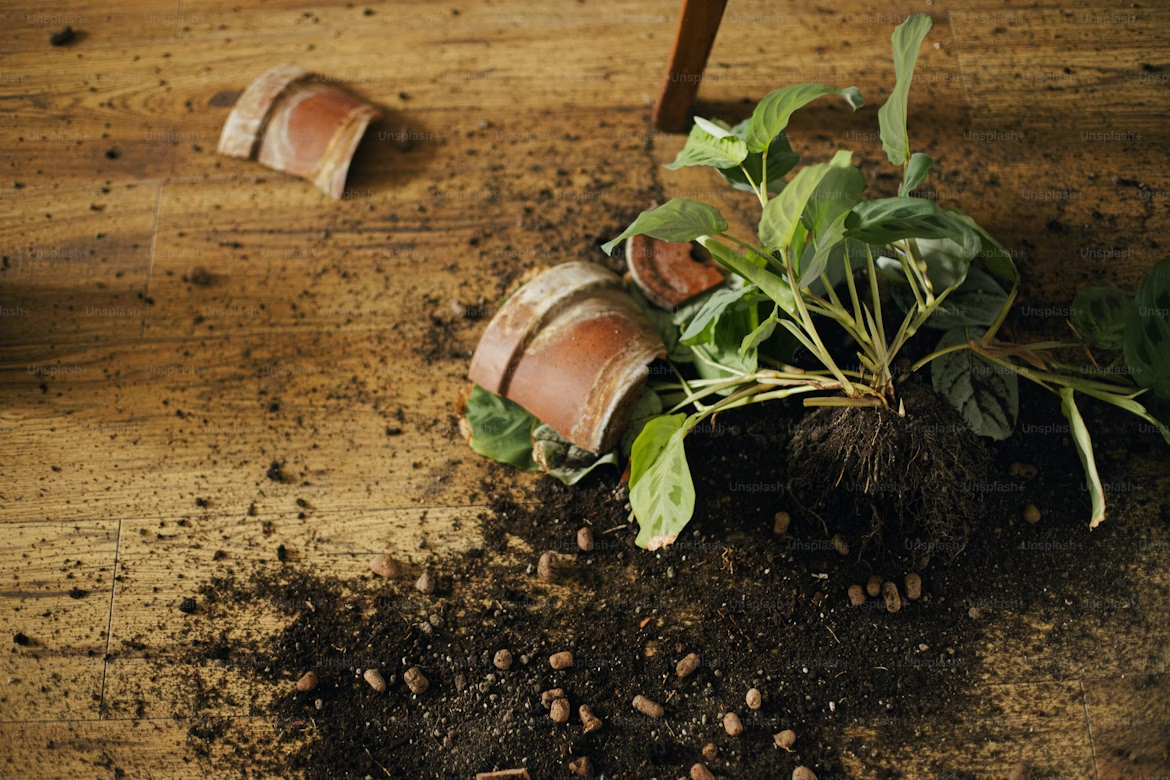
Looking back, most of my failures weren’t caused by complicated problems.
They came from ignoring simple things.
- poor soil
- wrong light placement
- overwatering
- overcrowding
these aren’t advanced issues—they’re foundational ones.
basic factors and their impact:
| Factor | If Ignored | Result |
| Soil quality | Weak roots | Slow growth |
| Sunlight | Insufficient energy | Weak or no development |
| Water balance | Root stress | Yellowing leaves |
| Spacing | Poor airflow | Increased disease risk |
what I realized:
Fixing the basics solved most problems without needing complicated solutions.
lesson learned:
Before looking for advanced fixes, check the fundamentals.
a combined lesson overview
| Tip Number | Core Idea | Key Benefit |
| 1 | Observe before reacting | Better decision-making |
| 2 | Keep setup simple | Easier control |
| 3 | Stay consistent | Stable plant health |
| 4 | Focus on basics | Fewer major problems |
a weekly recovery tracker after failure
After applying these lessons, I started tracking small improvements.
| Week | Change Applied | Result Observed |
| 1 | Reduced overwatering | Leaves stabilized |
| 2 | Improved light setup | Faster growth |
| 3 | Simplified routine | Less stress |
| 4 | Consistent care | Healthy appearance |
tracking helped me confirm that the changes were working.
mistakes that led to these lessons
Before learning these tips, I:
- reacted too quickly to problems
- overcomplicated simple setups
- neglected consistency
- ignored basic requirements
each mistake contributed to the lessons that followed.
why failure is part of the process
At the time, failure felt discouraging.
But looking back, it was necessary.
Without those mistakes:
I wouldn’t have understood what actually matters.
failure forced me to:
- slow down
- observe more carefully
- simplify my approach
and that’s what improved results.
how these tips changed my approach
after applying these lessons, gardening became:
- less stressful
- more predictable
- easier to manage
I stopped guessing and started understanding.
a simple daily observation chart
| Day | Plant Condition | Action Taken |
| Monday | Healthy | No change |
| Tuesday | Slight drooping | Checked soil |
| Wednesday | Soil dry | Watered lightly |
this helped me replace guesswork with awareness.
final thoughts
If you’re struggling with home gardening, it doesn’t necessarily mean you’re doing everything wrong.
Sometimes, it just means you haven’t yet identified what matters most.
These four tips didn’t come from success—they came from failure. And that’s what makes them reliable.
they focus on:
- understanding instead of reacting
- simplicity instead of complexity
- consistency instead of intensity
- basics instead of shortcuts
start with these, and most problems become easier to solve.
frequently asked questions
- is it normal to fail when starting home gardening?
Yes, most beginners experience failures before finding what works. - how can I avoid overreacting to plant problems?
Observe changes over a few days before making adjustments. - should I use advanced tools as a beginner?
Not necessary. A simple setup is often more effective. - how do I build consistency in plant care?
Create a small daily routine instead of doing everything at once. - what are the most important basics to focus on?
Soil quality, sunlight, watering, and spacing. - how long does it take to recover from plant care mistakes?
It depends, but improvements can often be seen within a few weeks.
These lessons didn’t make me a perfect gardener—but they made gardening feel manageable, and that’s what really matters.